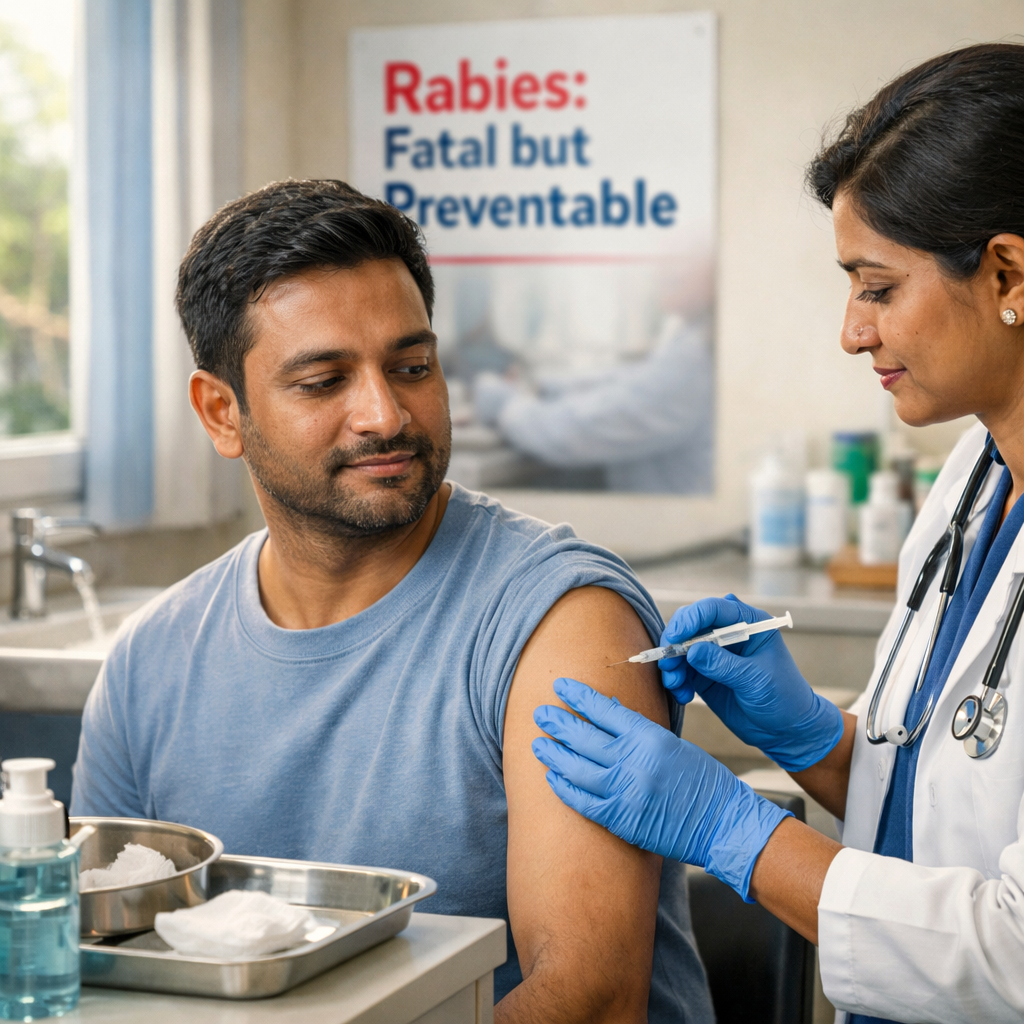
Rabies is a very dangerous disease. Once symptoms start, it is almost always fatal. In a city like Kolkata, where stray dog bites can happen and more people have pets, knowing about the rabies vaccine, proper dog bite treatment, and ways to prevent rabies is very important
What is Rabies?
Rabies is a viral disease caused by the rabies virus that affects the brain and nervous system.
According to the World Health Organisation:
- It spreads through bites or scratches from infected animals.
- In almost 99% of human cases globally, dogs are the source of infection.
- The virus is transmitted through saliva entering broken skin or mucous membranes (eyes, mouth).
Early Signs May Include:
Fever
A mild to moderate fever is often the first signal that something is wrong. At this stage, it may feel like a common viral illness.
Headache
Persistent headaches can develop as the virus begins affecting the nervous system. This pain may not respond well to regular medication.
Weakness or Fatigue
Some patients report feeling unusually tired or weak without any obvious reason. The body may feel heavy, and normal activities may become difficult.
Burning or Pain at the Bite Site
This is one of the more specific warning signs. Even if the wound has healed externally, unusual sensations such as tingling or sharp pain around the bite area can indicate viral activity.
Why Rabies Has No Cure
Rabies does not have a cure once symptoms start.
The virus travels from the wound site to the brain through peripheral nerves. By the time symptoms like confusion or paralysis appear, the virus has already reached the central nervous system.
According to both the Centers for Disease Control and Prevention and India’s Ministry of Health and Family Welfare, prevention through vaccination is the only proven life-saving strategy.
This is why immediate Anti Rabies Vaccine administration after exposure is critical.
Post-Exposure Prophylaxis (PEP) Explained
When a person is bitten, scratched or licked on broken skin by a potentially rabid animal, time becomes extremely important. Rabies does not wait for visible symptoms before causing harm.
The complete emergency prevention process followed after exposure is called Post-Exposure Prophylaxis (PEP). If started immediately and completed properly, PEP is highly effective in preventing rabies.
Step 1: Immediate Wound Care
The first and most powerful action begins at home.
- Wash the wound thoroughly with soap and running water for at least 15 minutes.
- This step significantly reduces the viral load at the entry point.
- Do not apply chili powder, turmeric, oil, toothpaste or herbal remedies.
- Avoid tight bandages unless specifically advised by a doctor.
- Do not ignore small scratches or superficial bites.
- Even minor skin breaks can allow the rabies virus to enter.
Step 2: Human Rabies Immunoglobulin (HRIG)
For more serious exposures such as deep wounds, multiple bites or injuries on the face and hands additional protection is required. HRIG as temporary protection during the early high-risk.
- HRIG is administered only once, at the start of treatment.
- The recommended dose is 20 IU per kilogram of body weight.
- It is carefully injected around the wound site.
- HRIG provides immediate passive antibodies.
- It protects the patient until the vaccine activates their own immune response.
Step 3: Anti Rabies Vaccine (ARV) Schedule
Along with wound care and HRIG (when required), starting the Anti Rabies Vaccine without delay is essential. The vaccine helps the body build long-term immunity against the virus.
Standard Intramuscular Schedule:
- Day 0 – First dose (day of exposure or first hospital visit)
- Day 3 – Second dose
- Day 7 – Third dose
- Day 14 – Fourth dose
- Day 28 – Fifth dose (only for immunocompromised individuals)
Each dose strengthens immune protection.Missing or delaying doses can reduce effectiveness. Completing the full schedule is critical for safety. Rabies prevention works only when the protocol is followed completely.
Pre-Exposure Prophylaxis (PrEP)
While PEP is given after exposure, Pre-Exposure Prophylaxis (PrEP) is taken before any bite or scratch occurs. It is designed for individuals who are more likely to come in contact with animals regularly.
Types of Rabies Vaccines Available in India
Modern rabies vaccines used in India are cell-culture based and safe. When considering Anti Rabies Vaccine in India, always ensure it is WHO-approved and administered in a proper medical setting.
Common types include:
- Human Diploid Cell Vaccine (HDCV)
- Purified Chick Embryo Cell Vaccine (PCECV)
- Purified Vero Cell Rabies Vaccine (PVRV)
Avante Health’s Role in Rabies Awareness & Care
Our support begins with Anti-Rabies vaccination for both PEP and PrEP exposure situations. Avante arranges and provides the required vaccination as part of the care process.
Many patients, especially elderly people and children, need structured supervision during recovery. We provide wound care monitoring at home, ensuring proper healing and infection control.
Our patient care services at home in Kolkata provide medication management, symptom tracking and safe recovery support under the guidance of trained professionals.
We ensure medicines are taken on time, dressings are changed properly, and any unusual symptoms are reported early. Our caregivers maintain regular health monitoring, including temperature checks and general condition assessment when required.
We also keep family members informed, so they feel confident and reassured throughout the recovery process.