Breathing should never feel like a daily struggle. When blood oxygen levels remain low because of a respiratory or other medical condition, prescribed oxygen therapy may be needed to support the body. For families looking for oxygen service at home in Kolkata, understanding when oxygen is appropriate, how it is monitored, and when professional assistance is required can make home recovery considerably safer.
Home oxygen therapy is often considered for people with chronic respiratory conditions, severe lung disease, certain heart conditions, or persistent low oxygen levels after illness. However, oxygen is not simply a treatment that can be started whenever breathlessness occurs. The flow rate, duration, delivery method, and monitoring requirements should be determined by a qualified healthcare professional.
This guide explains the important signs of low oxygen, the potential benefits of prescribed oxygen therapy, situations where home oxygen may be considered, and the role of professional monitoring. The focus is practical: helping families understand what should be checked before arranging oxygen support at home.
What Is Home Oxygen Therapy and When Is It Needed?
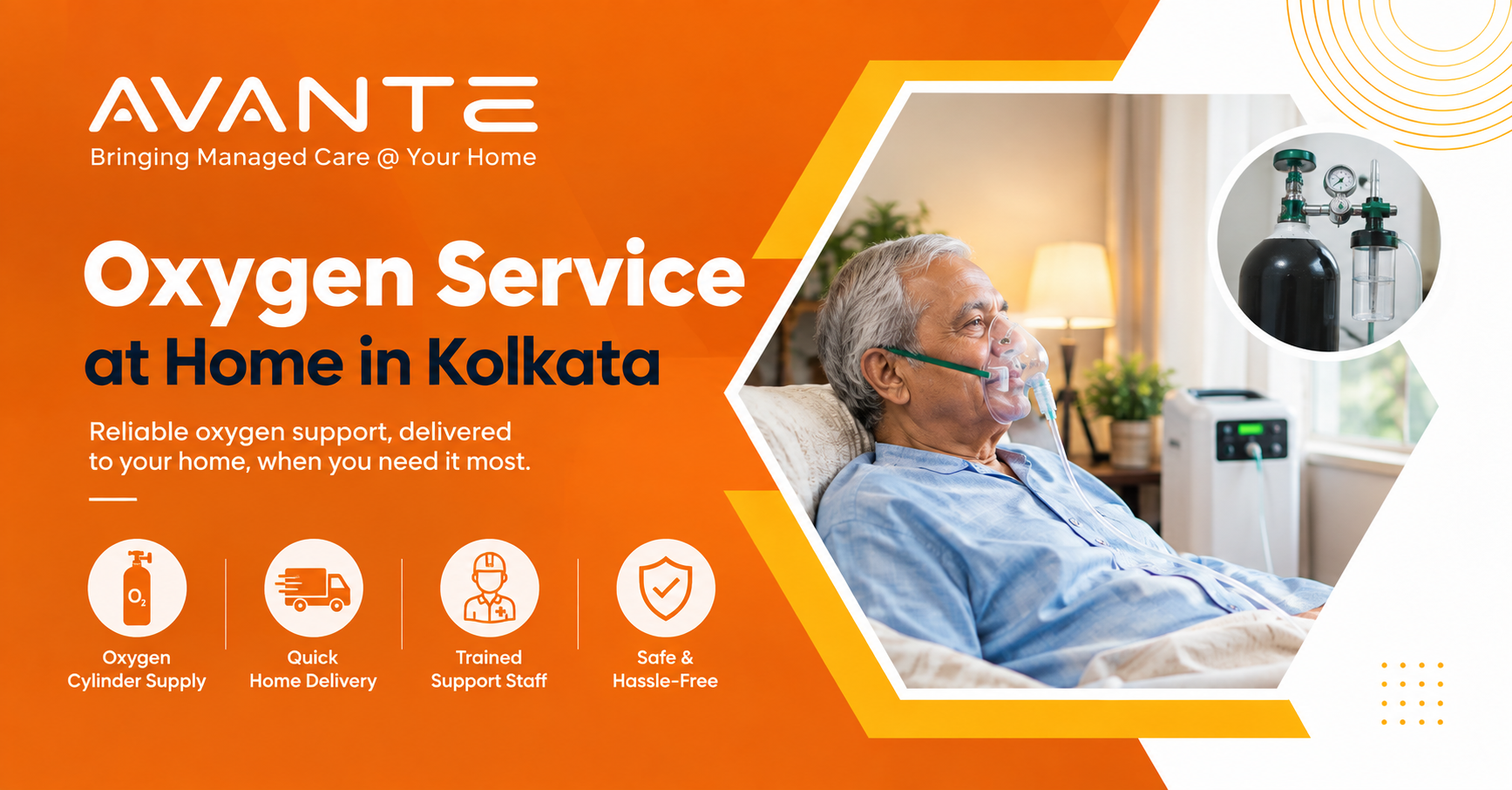
Home oxygen therapy involves supplemental oxygen being delivered to a patient outside a hospital setting. It may be provided through equipment such as an oxygen concentrator or oxygen cylinder, depending on the patient’s clinical requirements and the healthcare provider’s recommendation.
The purpose is to correct or prevent clinically significant hypoxaemia. It is generally prescribed after the patient’s oxygenation has been assessed rather than being used simply because someone feels breathless.
When may oxygen therapy be prescribed?
Oxygen may be considered when persistently low blood oxygen has been confirmed and the underlying condition requires supplementation. Conditions associated with oxygen requirements can include:
- Chronic obstructive pulmonary disease (COPD)
- Severe pneumonia or prolonged respiratory illness
- Interstitial lung disease
- Certain cardiac conditions
- Pulmonary hypertension
- Recovery following significant respiratory complications
- Other conditions causing clinically significant hypoxaemia
For example, established clinical guidance recommends long-term oxygen for selected COPD patients with severe resting hypoxaemia, including patients with an oxygen saturation (SpO₂) of 88% or below under specified clinical circumstances.
Importantly, the exact threshold and duration should not be interpreted as a self-treatment rule. A physician’s assessment is required because oxygen needs can vary according to diagnosis, blood-gas results, carbon dioxide retention, activity, sleep, and overall clinical condition.
What Are the Signs That a Person May Need Oxygen Support?
Low oxygen levels can sometimes develop without dramatic symptoms. Therefore, symptoms should be considered alongside pulse oximetry readings and clinical assessment rather than being used alone to decide whether oxygen should be started.
Common signs of low oxygen
Possible warning signs can include:
- Breathlessness at rest or with minimal activity
- Unusual tiredness or weakness
- Rapid breathing
- Increased heart rate
- Difficulty speaking comfortably because of breathlessness
- Bluish lips or fingertips
- Confusion or unusual drowsiness
- Reduced exercise tolerance
- Restlessness or difficulty concentrating
A pulse oximeter can provide a useful measurement of peripheral oxygen saturation. However, a single reading should not automatically be treated as a diagnosis. Poor circulation, cold fingers, movement, nail products, device limitations, and other factors can affect readings.
When should low oxygen become an urgent concern?
Severe breathing difficulty, bluish discoloration, sudden confusion, severe drowsiness, chest pain, or rapidly worsening symptoms should be treated as medical warning signs. Emergency medical assessment may be required rather than relying on home oxygen alone.
India’s Ministry of Health and Family Welfare guidance identifies pulse oximetry as an important method for assessing oxygenation and describes oxygen therapy as part of the management of hypoxic patients.
What Are the Benefits of Prescribed Oxygen Therapy at Home?
When oxygen has been medically prescribed for documented hypoxaemia, home treatment can support safer long-term management and reduce the practical difficulties associated with repeated hospital visits.
1. Oxygen levels can be supported at home
Supplemental oxygen can help maintain oxygenation when the lungs are unable to provide sufficient oxygen to the bloodstream. This is particularly relevant for selected patients with chronic respiratory disease and severe hypoxaemia.
2. Daily activities may become more manageable
For some appropriately prescribed patients, oxygen supplementation can reduce the effects associated with inadequate oxygenation. Depending on the underlying disease, improved oxygenation may support greater tolerance for routine activities.
However, oxygen should not be viewed as a treatment that automatically improves breathlessness caused by every condition. Breathlessness can have multiple causes, and treatment must be directed at the underlying problem.
3. Hospital visits may be reduced in suitable cases
When a patient’s condition has been stabilised and home treatment has been clinically approved, oxygen equipment can allow prescribed therapy to continue without requiring the patient to remain in hospital solely for oxygen supplementation.
4. Monitoring can be incorporated into home care
For patients who require regular observation, oxygen therapy can be combined with professional nursing support. This becomes particularly useful when medication schedules, vital-sign monitoring, mobility assistance, or other care requirements are also involved.
Oxygen Concentrator vs Oxygen Cylinder: Which Is Better for Home Use?
The choice between an oxygen concentrator and cylinder depends on the patient’s prescription, expected duration of use, mobility requirements, electricity availability, and backup needs.
| Feature | Oxygen Concentrator | Oxygen Cylinder |
| Oxygen Source | Extracts and concentrates oxygen from surrounding air | Stores compressed medical oxygen |
| Best Suited For | Minimal to moderate prescribed oxygen requirements (low to moderate flow) for regular home use | Higher oxygen requirements, intermittent use, portability and emergency/backup needs |
| Pressure Requirement | Does not store oxygen under high pressure (no bar pressure); delivers oxygen at a prescribed flow | Stores oxygen under high pressure and provides oxygen through a regulator |
| Continuous Use | Excellent for prolonged/continuous use while electricity is available | Limited by cylinder capacity; requires replacement/refilling |
| Electricity | Requires continuous electricity | No electricity required |
| Flow Requirement | Best when prescribed flow is within the machine’s rated capacity | Useful when prescribed flow is higher or when a dependable stored oxygen supply is required |
| COPD / ILD / Lung Disorders | Can be suitable for long-term oxygen therapy in COPD, ILD and other lung disorders when required flow is within capacity | Particularly useful for COPD, ILD and other significant lung disorders when higher flow, portability or reliable backup oxygen is required |
| Power Failure | Cannot function during power failure | Continues to provide oxygen during power failures |
| Portability | Standard units are not very portable; portable models are available | Portable cylinders are available in different sizes |
| Maintenance | Requires electrical power and periodic servicing | Requires refilling/replacement and regulator maintenance |
| Backup | A backup cylinder is strongly recommended for oxygen-dependent patients | Can itself serve as emergency/backup oxygen |
| Overall Advantage | Convenient, economical and ideal for regular low-flow home oxygen | More versatile when stored oxygen, higher flow, portability or emergency reliability is important |
Oxygen Concentrator
Best suited for patients requiring minimal to moderate prescribed oxygen (low flow) for regular or continuous home use, where electricity is reliably available. Does not store oxygen under high pressure.
Oxygen Cylinder
Better suited when higher oxygen flow, portability, immediate oxygen availability or backup during power failure is required. Particularly useful for patients with COPD, ILD and other significant lung disorders depending on their prescription.
Important: The right choice depends on the prescribed oxygen flow, duration of therapy, underlying lung condition, mobility and need for backup -not simply on convenience.
A concentrator may be convenient for regular home use because oxygen can be produced continuously while electricity is available. Nevertheless, a backup plan should be considered, especially for patients who depend on continuous oxygen.
The appropriate equipment should therefore be selected according to the prescribed flow and clinical requirement rather than convenience alone.
How Is Oxygen Therapy Safely Managed at Home?
Safe oxygen therapy involves much more than switching on a machine. Equipment should be correctly installed, the prescribed flow should be followed, and the patient’s response should be observed.
Follow the prescribed oxygen flow
Oxygen flow should never be increased or decreased independently. In particular, some patients with chronic respiratory disease may have carbon dioxide retention, making inappropriate oxygen administration potentially harmful.
For certain patients with COPD and hypercapnia, controlled oxygen targets are used in clinical settings. NHS guidance, for example, identifies 88–92% as a target range in relevant hypercapnic COPD situations.
This does not mean that 88–92% is a universal home target. The appropriate target should be provided by the treating clinician.
Keep oxygen equipment away from fire
Oxygen supports combustion. Therefore, smoking, open flames, candles, incense, and other ignition sources should be kept away from oxygen equipment.
The following precautions should be maintained:
- No smoking near oxygen equipment
- Keep oxygen away from flames and heat sources
- Use equipment according to manufacturer instructions
- Keep tubing free from unnecessary bends
- Ensure adequate ventilation
- Check connections and equipment regularly
- Follow prescribed flow rates
- Keep emergency contact information accessible
Monitor the patient’s condition
Oxygen saturation should be monitored according to the healthcare provider’s instructions. Changes in respiratory rate, consciousness, heart rate, colour, and general behaviour should also be noticed.
A falling SpO₂ reading combined with worsening breathlessness should not simply be managed by increasing oxygen flow. Medical advice may be required to identify the reason for deterioration.
When Is 24-Hour Nursing Care Useful Alongside Oxygen Therapy?
Oxygen therapy can become more complex when a patient also requires continuous observation, medication support, mobility assistance, or post-hospital care. In such circumstances, 24 hour nursing care at home in Kolkata can provide structured supervision alongside the prescribed respiratory support.
Professional nursing may be particularly useful when:
- Oxygen saturation needs to be monitored regularly
- Multiple medications are being administered
- The patient has limited mobility
- A patient has recently been discharged from hospital
- Family members cannot provide continuous supervision
- The patient requires assistance with personal care
- Changes in breathing need to be reported promptly
- Other medical devices are being used at home
The role of a nurse is not to independently change the oxygen prescription. Instead, observations can be documented and significant changes can be communicated to the treating medical team.
When Can ICU at Home Services in Kolkata Be Considered?
Not every patient receiving oxygen needs intensive home care. However, patients with complex medical needs may require a more comprehensive setup involving respiratory support, monitoring equipment, trained caregivers, and clinical supervision.
For selected patients, ICU at home services in Kolkata may be considered when the patient is medically stable enough to remain at home but still requires high-level clinical support. Such arrangements should only be made after appropriate medical assessment and careful care planning.
What may be included in a higher-dependency home setup?
Depending on the patient’s condition, a structured home-care plan may involve:
- Continuous or scheduled vital-sign monitoring
- Oxygen therapy
- Respiratory support as prescribed
- Medication and injection administration
- ECG or other monitoring where clinically required
- Nursing supervision
- Pressure-sore prevention
- Nutrition and hydration support
- Emergency escalation planning
The suitability of home ICU care should always be determined by the treating physician and care team. Acute respiratory failure, rapidly worsening breathing, severe altered consciousness, or other unstable conditions may require hospital-level emergency treatment instead.
What Does Home Oxygen Care Typically Involve?
A safe home oxygen plan is usually built around assessment, equipment, monitoring, and escalation.
Step 1: Clinical assessment
The patient’s diagnosis, oxygen saturation, symptoms, medical history, and overall condition are reviewed. Additional investigations may be required when clinically appropriate.
Step 2: Oxygen prescription
The healthcare professional determines whether oxygen is required and specifies the appropriate flow, duration, and delivery method.
Step 3: Equipment setup
The selected oxygen concentrator, cylinder, tubing, nasal cannula, or other equipment is arranged according to the prescription.
Step 4: Monitoring
SpO₂ and other relevant observations are monitored according to the care plan. Any significant change should be documented and communicated.
Step 5: Escalation
If symptoms worsen despite prescribed therapy, medical attention should be sought. Home oxygen should never be treated as a replacement for emergency care.
What Does the Indian Healthcare Context Tell Us?
Respiratory disease represents an important healthcare burden in India. WHO’s India profile lists COPD among the country’s leading causes of death, with a reported COPD mortality rate of 70.5 per 100,000 population in 2021.
Air pollution also remains relevant to respiratory health. WHO reports that household air pollution contributes to COPD mortality in low- and middle-income countries and identifies respiratory disease among the major health consequences of household air pollution.
These figures do not mean that every person with a respiratory condition requires oxygen. Instead, they highlight why appropriate diagnosis, monitoring, prescribed treatment, and timely escalation remain important parts of respiratory care.
How Can Families Choose Safe Oxygen Support at Home in Kolkata?
Choosing home oxygen support should be based on clinical requirements rather than simply equipment availability. A reliable service should be able to coordinate the equipment and care requirements specified by the patient’s healthcare team.
Before arranging support, families should check:
- Whether oxygen has been prescribed
- Required oxygen flow and duration
- Type of oxygen equipment needed
- Availability of backup oxygen
- Equipment maintenance and servicing
- Nursing support requirements
- Emergency escalation procedures
- Monitoring arrangements
- Availability of trained healthcare personnel
For patients who require more than oxygen equipment, a coordinated home-care plan can be more appropriate than arranging oxygen delivery alone.
Key Takeaways About Home Oxygen Therapy
Home oxygen can be an important part of care when clinically significant hypoxaemia has been confirmed and oxygen has been prescribed by a qualified healthcare professional. It can support oxygenation and make ongoing respiratory management more practical for suitable patients.
At the same time, oxygen is not a universal remedy for breathlessness. Correct prescription, appropriate equipment, monitoring, fire safety, and timely medical escalation are essential.
For families seeking oxygen service at home in Kolkata, professional coordination can help ensure that prescribed oxygen therapy is delivered within a structured and clinically appropriate home-care plan. When nursing or higher-dependency support is also required, a personalised home-care assessment should be considered.
For professional oxygen service at home in Kolkata, contact Avante Health at 8100636373 for a same-day assessment. Our team can understand the patient’s oxygen requirements, arrange appropriate home oxygen support, and guide families through safe and personalised respiratory care at home.
Frequently Asked Questions
1. Who may need oxygen therapy at home?
Home oxygen therapy may be prescribed for people with confirmed low blood oxygen levels caused by conditions such as COPD, severe respiratory disease, certain heart conditions, or other medical problems affecting oxygenation. The need for oxygen should always be determined by a qualified healthcare professional.
2. Can oxygen therapy be provided at home in Kolkata?
Yes, prescribed oxygen therapy can be arranged for suitable patients at home. Professional oxygen service at home in Kolkata can help families access the required oxygen equipment and support according to the patient’s medical care plan.
3. What oxygen saturation level may require oxygen therapy?
There is no single oxygen saturation number that applies to every patient. Oxygen requirements depend on the underlying condition, symptoms, clinical assessment, and the target range prescribed by the treating doctor.
4. Can a pulse oximeter determine whether someone needs oxygen?
A pulse oximeter can measure peripheral oxygen saturation, but the reading should not be used alone to decide whether oxygen should be started. Symptoms, medical history, circulation, device accuracy, and clinical assessment should also be considered.
5. Is home oxygen therapy safe?
Prescribed oxygen can generally be used safely when the equipment and flow rate are managed correctly. Oxygen supports combustion, so smoking, candles, incense, open flames, and other ignition sources should be kept away from oxygen equipment.
6. Can oxygen flow be increased when breathlessness becomes worse?
Oxygen flow should not be increased independently unless the treating healthcare professional has provided specific instructions. Worsening breathlessness can have several causes and may require medical assessment rather than simply increasing oxygen.