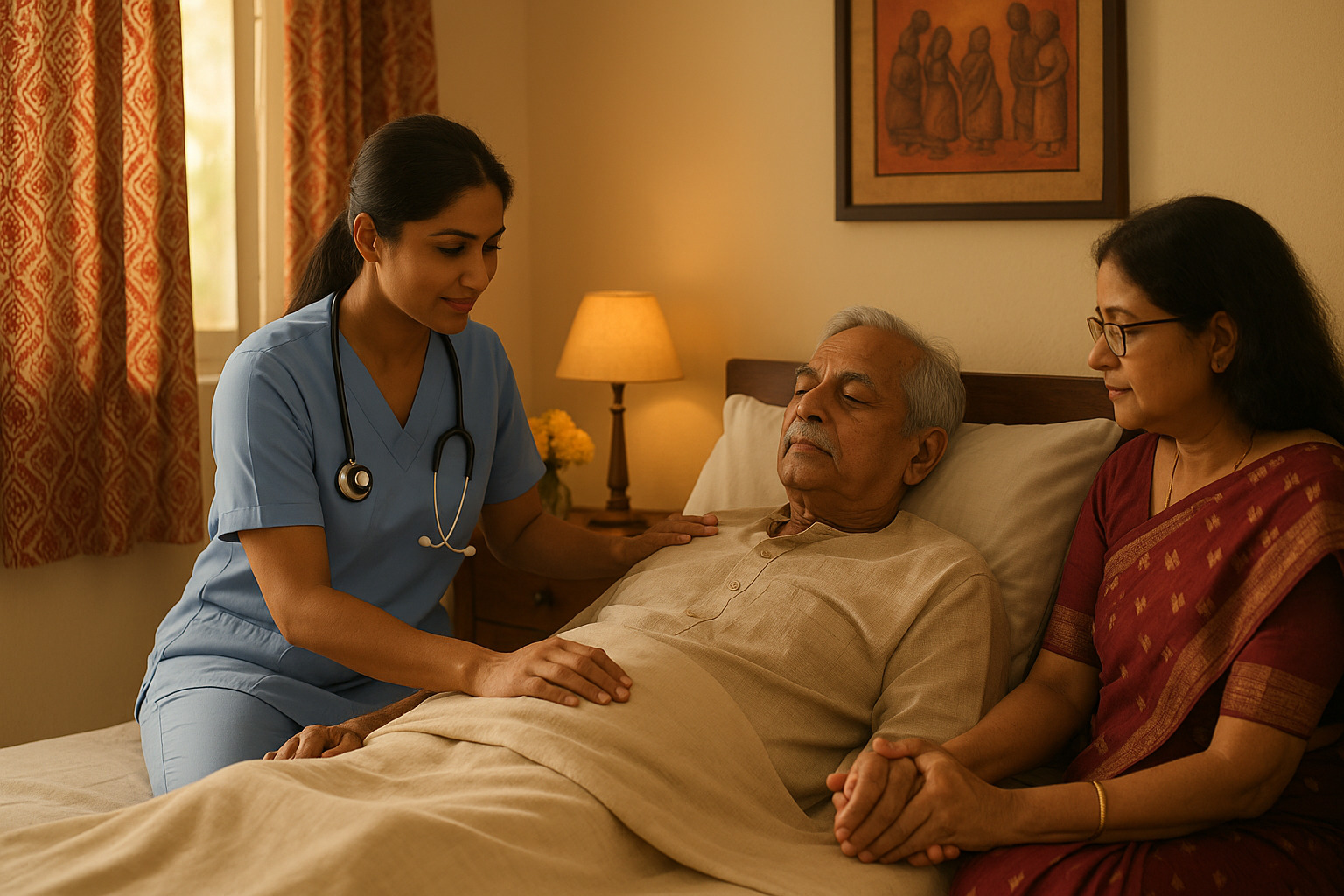
Ageing should not mean giving up independence, comfort or the familiarity of home. For many senior citizens in Kolkata, however, managing chronic illnesses, attending regular medical appointments and completing everyday activities can become increasingly challenging. Families may also struggle to balance professional responsibilities with the care their elderly loved ones need.
This is where home care services in Kolkata are making a meaningful difference. By bringing professional nursing, personal assistance, rehabilitation and medical monitoring into the home, home healthcare helps older adults receive appropriate support while remaining in familiar surroundings.
From assistance with daily activities to specialised nursing and critical care support, home healthcare is changing how families approach ageing. For seniors living with diabetes, mobility limitations, respiratory conditions or post-surgical complications, the right care plan can improve comfort, support independence and help families manage their responsibilities more confidently.
For Avante Health, the focus is on making professional home-based care more accessible while helping senior citizens experience ageing with dignity.
1. Why Elderly Care at Home Is Becoming Increasingly Important
India is experiencing a significant demographic shift. According to the United Nations Population Fund (UNFPA), India had approximately 153 million people aged 60 and above in 2022. This figure is projected to reach 347 million by 2050, making elderly care an increasingly important healthcare priority.
These figures highlight the growing need for healthcare systems that support older adults beyond hospital visits.
In Kolkata, changing family structures, demanding work schedules and the needs of seniors living alone can make consistent caregiving difficult. Some older adults have children living in other cities or countries, while others require daily assistance despite being medically stable.
Common challenges faced by senior citizens
- Chronic illnesses: Diabetes, hypertension, heart disease and other long-term conditions often require regular monitoring and medication management.
- Reduced mobility: Arthritis, balance problems and muscle weakness can make walking, bathing and using stairs difficult.
- Post-hospital recovery: Older adults may need assistance after surgery, fractures, infections or prolonged hospital stays.
- Memory-related conditions: Dementia and other cognitive difficulties can affect communication, medication routines and personal safety.
- Social isolation: Living alone or having limited social interaction can affect emotional well-being.
- Caregiver pressure: Family members may find it difficult to provide continuous support while managing work and other responsibilities.
Home healthcare addresses these challenges by bringing suitable care to the patient’s residence. The aim is not simply to provide assistance, but to help older adults maintain their routines, dignity and quality of life.
2. What Are Home Healthcare Services in Kolkata?
Home healthcare refers to medical and supportive services delivered at a patient’s home according to their individual needs. Depending on the person’s condition, care may involve qualified nurses, trained patient attendants, physiotherapists and other healthcare professionals.
Unlike informal caregiving alone, professional home healthcare can provide structured care plans, clinical monitoring and coordination with treating doctors.
The services may be particularly useful for:
- Senior citizens who need daily personal assistance.
- Bedridden patients who require help with hygiene, feeding and repositioning.
- Patients recovering after surgery or hospitalisation.
- Individuals living with chronic conditions.
- Patients who need prescribed oxygen therapy or respiratory monitoring.
- Families seeking palliative or end-of-life care support.
Common home healthcare services and their purposes
| Service | How it supports elderly patients |
|---|---|
| Elderly care at home | Daily assistance, companionship and support with routines |
| Nursing care | Clinical procedures, medication administration as prescribed and monitoring |
| Medical attendant support | Help with mobility, bathing, meals and other daily activities |
| Physiotherapy | Rehabilitation, balance training and mobility exercises |
| Bedridden patient care | Repositioning, hygiene, feeding assistance and skin care |
| Respiratory support | Prescribed oxygen therapy and monitoring where appropriate |
| Wound care | Assessment and dressing of wounds according to clinical instructions |
| Home diagnostics | Selected tests and investigations arranged at home, subject to availability |
| Critical and palliative care | Individualised support for complex conditions and comfort-focused care |
The appropriate combination depends on the patient’s medical condition, functional abilities and the recommendations of their healthcare team.
3. The Major Benefits of Home Healthcare for Senior Citizens
A. Comfort and familiarity
Home is often the place where older adults feel most secure. Familiar rooms, personal belongings, family conversations and established routines can make daily life more comfortable.
Receiving care at home allows seniors to maintain many of these routines while getting assistance with essential health needs. It can also reduce the physical and logistical burden of repeated travel for services that can safely be delivered at home.
B. Personalised attention
Every older adult has different requirements. One person may need help with bathing and meals, while another may require wound management, rehabilitation or regular clinical observation.
A personalised care plan considers:
- Medical history and current diagnoses.
- Mobility and risk of falls.
- Medication schedules prescribed by the doctor.
- Nutritional and hydration needs.
- Personal hygiene and skin condition.
- Cognitive, emotional and social needs.
- Family preferences and available support.
This individualised approach helps caregivers focus on the patient’s actual needs instead of following a uniform routine for everyone.
C. Better continuity of care
A well-organised home healthcare plan can help families maintain records of symptoms, medication routines, vital signs and changes in daily functioning.
Caregivers should communicate significant changes to the family and appropriate healthcare professionals. This is particularly important for seniors with diabetes, hypertension, respiratory disease or other conditions that require ongoing attention.
Home healthcare does not replace medical consultations or emergency treatment. Instead, it can complement them by supporting everyday care and helping families identify when professional review may be needed.
D. Support for family caregivers
Family members often want to provide the best possible care but cannot always remain available throughout the day or night.
Professional assistance can help distribute caregiving responsibilities more sustainably. Depending on the arrangement, support may be provided for a few hours, during the day, overnight or around the clock.
This allows family members to remain involved in important decisions while trained personnel assist with agreed care responsibilities.
E. Greater independence and dignity
The purpose of elderly care should not be to take away a senior citizen’s independence. Wherever medically appropriate, caregivers can encourage patients to participate in everyday activities according to their abilities.
For example, a caregiver might provide support while a senior walks to the dining area instead of completing every task on their behalf. Physiotherapy may also help eligible patients work towards improved strength and balance.
The goal is to provide the right amount of assistance without unnecessarily limiting independence.
4. Essential Home Healthcare Services for Elderly Patients
The following services can be combined according to a senior citizen’s needs and the clinical advice of their treating doctor.
4.1 Elderly care and daily living assistance
Elderly care at home may include assistance with bathing, dressing, grooming, eating, walking and maintaining a regular daily routine.
It can be especially helpful for older adults who have reduced mobility but do not necessarily require continuous skilled nursing.
Caregivers may also offer companionship, help maintain daily schedules and inform family members about changes in appetite, mood or activity levels.
4.2 Nursing care at home
Some elderly patients need clinical support that goes beyond routine personal assistance. This may include wound care, monitoring vital signs, administering prescribed medicines or injections within the nurse’s authorised scope, and assisting with recovery after hospitalisation.
Families looking for home nursing services near kolkata should check whether the provider can arrange appropriately qualified nursing personnel for the patient’s location, condition and required schedule.
Nursing requirements should be assessed individually. A patient who needs periodic clinical procedures may require a different arrangement from someone who needs continuous observation or complex care.
4.3 Medical attendant at home
A medical attendant at home in kolkata can support patients who need help with everyday activities and routine supervision.
Depending on the agreed care plan and the attendant’s training, responsibilities may include:
- Assisting with walking and transfers between bed and chair.
- Helping with bathing, dressing and personal hygiene.
- Supporting meal routines and feeding where appropriate.
- Providing medication reminders according to the prescribed schedule.
- Assisting with safe positioning and mobility.
- Observing and reporting changes in the patient’s condition.
It is important to distinguish an attendant’s responsibilities from those of a qualified nurse. Clinical procedures, medical assessments and other regulated tasks must be performed by appropriately qualified professionals.
4.4 Bedridden patient care at home
Bedridden seniors may require extensive assistance because prolonged immobility can increase the risk of pressure injuries, joint stiffness, constipation, respiratory complications and other problems.
Professional care can include:
- Regular repositioning according to an individualised plan.
- Hygiene and continence care.
- Safe feeding and hydration support.
- Mobility exercises where recommended.
- Monitoring skin condition, especially over bony areas.
- Assistance with pressure-relieving mattresses and positioning aids.
- Communication with the clinical team when symptoms change.
Family members should seek clinical guidance if a patient develops persistent redness, broken skin, increasing pain, fever or a wound that is not healing.
4.5 Physiotherapy at home
Age-related weakness, arthritis, injuries and prolonged bed rest can reduce strength and mobility. Home-based physiotherapy in Kolkata can help suitable patients work towards better movement and functional independence.
A qualified physiotherapist may design exercises for balance, flexibility, muscle strength, walking and post-operative rehabilitation.
The programme should match the patient’s health status and tolerance. Exercise should not be started or intensified without appropriate assessment when the patient has significant pain, unstable medical conditions or recent surgery requiring specific precautions.
4.6 Oxygen support and respiratory care
Older adults with certain respiratory or cardiac conditions may be prescribed oxygen therapy at home. In these situations, families need clear instructions on equipment use, oxygen flow settings, safety precautions and when to contact a healthcare professional.
A reliable oxygen service at home in Kolkata can help families arrange suitable equipment and related support, subject to availability and clinical requirements.
Oxygen should only be used according to medical advice. Families should never change prescribed oxygen settings independently, and oxygen equipment must be kept away from smoking, open flames and other ignition sources.
4.7 Wound management and bed sore dressing
Older adults who are bedridden, have diabetes or experience poor circulation may be more vulnerable to wounds that heal slowly.
Bed sore dressing at home in Kolkata may be appropriate when a clinician has assessed the wound and confirmed that home-based management is suitable. Depending on the wound, care may involve cleaning, dressing selection, skin protection, pressure relief and monitoring for signs of infection.
A wound that becomes increasingly painful, swollen, warm or foul-smelling, or develops spreading redness or associated fever, needs prompt medical assessment. Deep or worsening pressure injuries may require specialist care rather than routine dressing alone.
4.8 Palliative and critical care support
Some seniors live with advanced illnesses that require complex symptom management, comfort-focused care or support during the final stages of life.
Palliative care aims to relieve suffering and improve quality of life for patients and their families. Depending on the clinical situation, home-based support may include pain and symptom management, nursing assistance, emotional support and coordination with doctors.
Critical care at home is suitable only when the necessary clinical assessment, trained staff, equipment, monitoring and escalation arrangements are in place. It should not be assumed to be a safe substitute for hospital care in every emergency or unstable condition.
5. How to Choose the Right Home Healthcare Provider in Kolkata
Choosing a home healthcare provider is an important decision because the quality of care can directly affect a senior citizen’s comfort, safety and daily routine.
Families should look beyond availability and pricing. They should also assess staff qualifications, supervision, communication practices and the provider’s ability to respond when a patient’s condition changes.
A practical checklist for families
- Verify staff qualifications: Confirm the training and credentials of nurses, physiotherapists and other clinical professionals.
- Discuss the care plan: Explain the patient’s medical history, mobility limitations, medication requirements and daily routine.
- Check staff verification: Ask about identity verification, background checks, references and recruitment standards.
- Understand supervision: Find out who monitors care quality and how concerns are escalated.
- Clarify shift arrangements: Confirm whether the service offers hourly, daytime, overnight or 24-hour assistance.
- Ask about emergency procedures: Understand when the provider contacts the treating doctor, arranges emergency transport or directs the family to a hospital.
- Review costs and inclusions: Ask whether nursing procedures, equipment, consumables, travel and replacement staff are charged separately.
- Establish communication: Agree on how the family will receive updates about medication, meals, mobility and changes in the patient’s condition.
Home healthcare provider comparison table
| What to check | Questions to ask |
|---|---|
| Staff experience | Has the professional handled similar patient needs? |
| Care planning | Is there an individualised plan based on the patient’s condition? |
| Availability | Can the provider cover the required days and shifts? |
| Clinical supervision | Who can the family contact about medical concerns? |
| Equipment | Are required devices available, or must the family arrange them? |
| Pricing | Is the estimate transparent, with additional charges explained? |
| Continuity | What happens if the assigned caregiver is unavailable? |
A provider that communicates clearly and explains the limits of its services can help families make better-informed decisions.
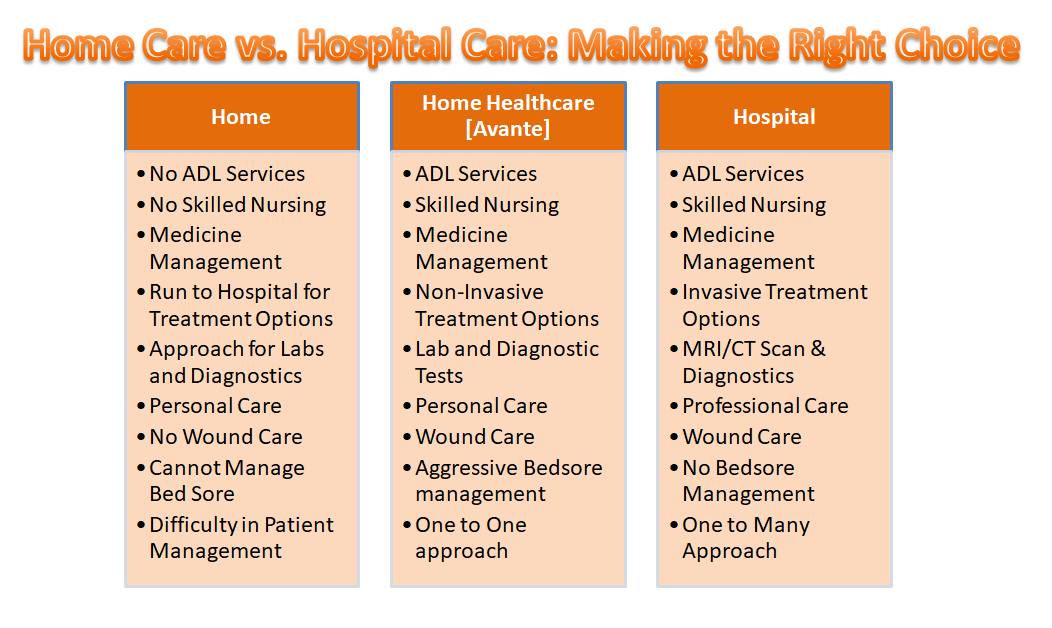
6. Home Healthcare vs Hospital Care: What Should Families Consider?
Home healthcare and hospital care serve different purposes. The right choice depends on the patient’s clinical stability, the level of monitoring required and whether the home environment can support safe care.
| Factor | Home healthcare | Hospital care |
|---|---|---|
| Environment | Familiar surroundings | Clinical environment |
| Daily assistance | Can be tailored to the patient’s routine | Depends on hospital services and staffing |
| Routine monitoring | Available according to the care plan | Can provide more intensive monitoring when required |
| Emergency response | Requires a clear escalation and transport plan | Immediate hospital-based assessment and treatment are available |
| Rehabilitation | May allow therapy in the patient’s everyday environment | May be available through inpatient rehabilitation or hospital departments |
| Family involvement | Families can participate in daily routines | Involvement depends on hospital policies |
| Suitability | Stable patients whose needs can be safely managed at home | Patients requiring urgent evaluation, intensive treatment or hospital-level monitoring |
Home care should never delay emergency treatment. Sudden chest pain, severe breathing difficulty, new stroke symptoms, loss of consciousness or other serious warning signs require urgent medical attention.
7. The Role of Technology in Modern Elderly Care
Home healthcare is evolving beyond traditional caregiving. When used appropriately, technology can support communication, monitoring and continuity of care.
Tools that can make home-based care more organised
- Digital health records: Help families and clinicians review relevant medical history, medication lists and care notes.
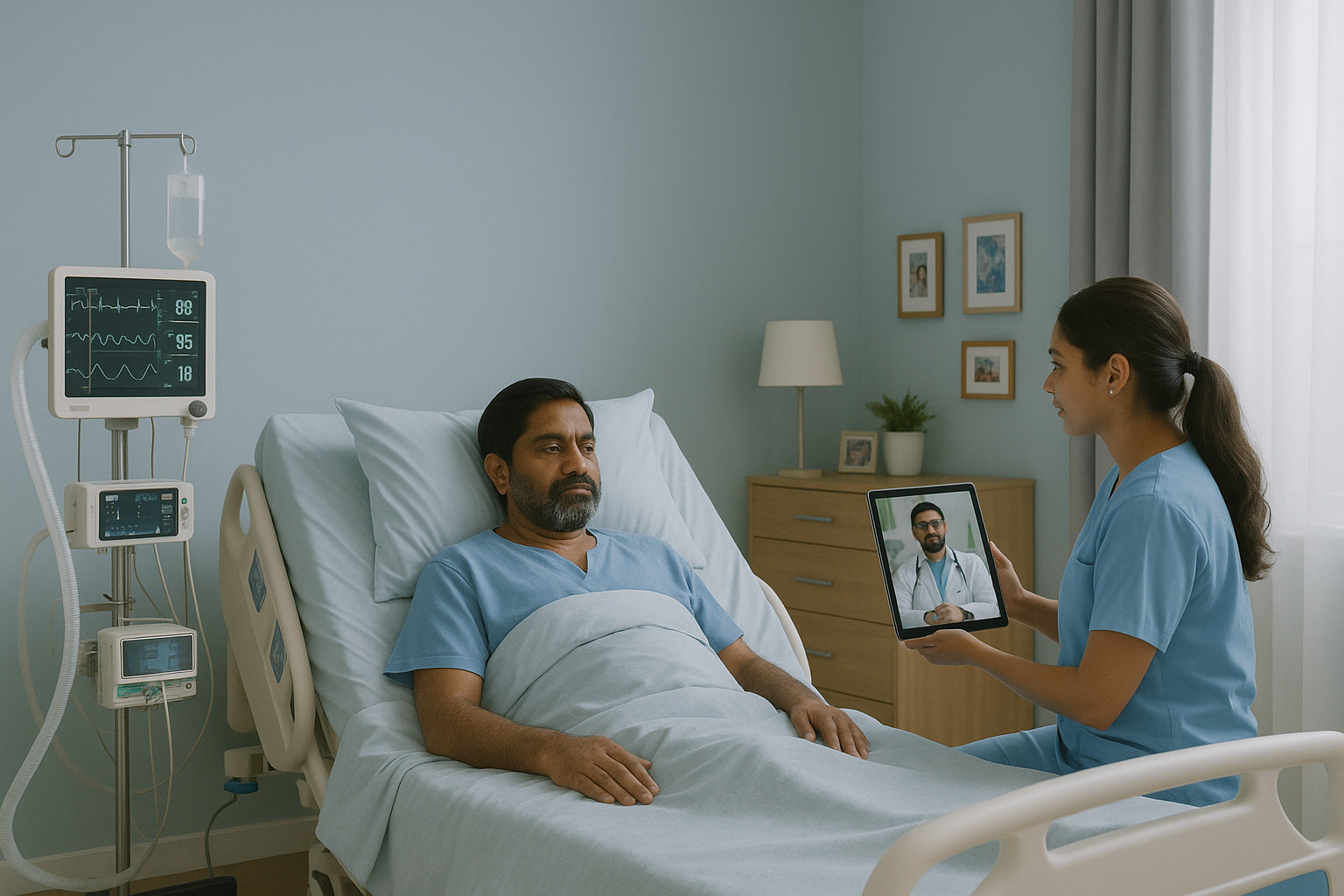
- Remote consultations: Allow patients to consult healthcare professionals when an in-person visit is not necessary.
- Home monitoring devices: Blood pressure monitors, thermometers, glucometers and pulse oximeters can help track selected health measurements when recommended.
- Medication reminders: Written schedules, alarms or digital tools can help patients and caregivers follow prescribed routines.
- Family communication systems: Regular updates help relatives stay informed even when they live outside Kolkata.
Technology should complement, not replace, professional judgement. Home measurements may be inaccurate, and a normal reading does not always rule out a serious medical problem.
For older adults who are unfamiliar with smartphones or digital tools, caregivers can help make these systems easier to use while respecting privacy and independence.
8. Why Bed Sore Prevention and Regular Monitoring Matter
One important aspect of elderly care is identifying risks before they become serious problems. Seniors with limited mobility may spend long periods in bed or in a chair, placing pressure on the skin and underlying tissues.
Pressure injuries, commonly called bedsores, can develop when pressure is not relieved adequately. Risk may be higher when a patient has poor nutrition, reduced sensation, incontinence or limited ability to change position.
Essential preventive practices
- Follow a repositioning schedule recommended for the individual patient.
- Keep the skin clean and dry, using appropriate products and techniques.
- Inspect vulnerable areas regularly, especially the heels, hips, tailbone and ankles.
- Use suitable pressure-redistributing mattresses or cushions when recommended.
- Support adequate nutrition and hydration according to the patient’s medical needs.
- Seek professional advice when redness persists or skin damage appears.
Families arranging Bed sore dressing at home in Kolkata should confirm that wound care is provided by an appropriately qualified professional and that the underlying causes of the wound are also addressed.
Dressing a wound alone is not enough if pressure, poor circulation, infection or another contributing problem remains untreated.
9. Understanding the Cost of Home Healthcare
The cost of home healthcare depends on the type of assistance required, the patient’s condition, the duration of care and the professionals involved.
For example, a senior who needs a few hours of personal assistance each day will generally require a different service arrangement from a bedridden patient who needs continuous nursing supervision.
Factors that influence the cost
| Cost factor | Why it matters |
|---|---|
| Type of caregiver | Personal assistance and qualified nursing involve different responsibilities and rates |
| Duration | Hourly, shift-based and 24-hour arrangements have different cost structures |
| Clinical complexity | Specialised procedures and complex monitoring may require additional expertise |
| Equipment | Oxygen concentrators, hospital beds and other devices may involve separate charges |
| Consumables | Dressings, protective products and clinical supplies may be billed separately |
| Location and travel | Availability and travel requirements can affect the overall estimate |
| Additional services | Physiotherapy, diagnostic tests and doctor visits may be charged separately |
Families should request a written estimate and confirm exactly what is included before starting care.
Home healthcare may reduce some travel and hospital-related expenses, but it is not always cheaper than hospital treatment. The fairest comparison considers the patient’s actual clinical needs, total costs and safety rather than price alone.
10. How Avante Health Supports Elderly Care in Kolkata
Avante Health is a Kolkata-based home healthcare provider focused on helping patients receive appropriate support in the comfort of their homes.
Its approach centres on personalised assistance, compassionate caregiving and professional support according to the patient’s needs. For families caring for older adults, a coordinated service can make it easier to organise daily assistance and clinical care.
Depending on availability, suitability and the patient’s requirements, relevant services may include:
- Elderly care at home: Support with everyday activities, routines and personal comfort.
- Bedridden patient care: Assistance with hygiene, positioning and daily needs.
- Nursing support: Clinical care delivered by appropriately qualified nursing professionals.
- Patient attendant services: Help with mobility, meals and personal assistance.
- Physiotherapy: Rehabilitation support to improve movement and functional ability.
- Medical monitoring: Observation and reporting in line with the agreed care plan.
- Respiratory support: Assistance with prescribed oxygen therapy and related home-care arrangements.
- Wound care: Professional assessment and dressing support where home management is appropriate.
- Palliative care: Comfort-focused support for eligible patients and their families.
The exact service arrangement should be confirmed with Avante Health after discussing the patient’s condition, location, required schedule and clinical needs.
A more coordinated approach to ageing
Effective elderly care involves more than assigning a caregiver. It requires understanding the patient’s preferences, communicating with family members, maintaining appropriate records and involving qualified professionals when clinical concerns arise.
Avante’s focus on personalised care can help families explore a structured approach to supporting their loved ones while preserving comfort and dignity.
Also Read: How to Choose the Best Home Care Service in Kolkata for Elderly Family Members?
Conclusion: Helping Seniors Age with Dignity at Home
Ageing brings changing needs, but it should not mean losing the comfort of home or the ability to participate in everyday life. With the right combination of personal assistance, nursing, rehabilitation and medical supervision, many older adults can receive meaningful support in familiar surroundings.
For families exploring home care services in Kolkata, the first step is to understand the senior citizen’s actual needs and identify a provider that can deliver suitable, safe and consistent care.
Avante Health helps families explore home-based care options for elderly patients, bedridden individuals and people recovering from illness or surgery. By focusing on personalised support and dignity, home healthcare can help families approach caregiving with greater confidence.
Looking for elderly care or nursing support for a loved one? Contact Avante Health to discuss the patient’s needs, understand the available services and explore a suitable home healthcare plan.
Because quality elderly care is not just about managing illness. It is about helping people live with comfort, respect and dignity at every stage of life.
Frequently Asked Questions
1. What are the benefits of home healthcare for elderly patients in Kolkata?
Home healthcare allows elderly patients to receive personal assistance, nursing care, physiotherapy and medical monitoring in familiar surroundings. It can reduce travel-related difficulties, support recovery and help seniors maintain comfort, independence and dignity.
2. What services are included in home care services in Kolkata?
Home care services in Kolkata may include elderly care, bedridden patient care, nursing support, medical attendant services, physiotherapy, wound dressing, oxygen support and palliative care. The appropriate services depend on the patient’s medical condition and individual care requirements.
3. How can I arrange home nursing services near Kolkata for an elderly family member?
Start by assessing the patient’s medical needs, daily assistance requirements and preferred care schedule. Contact a home healthcare provider such as Avante Health to discuss staff qualifications, nursing availability, care planning and pricing before selecting a suitable arrangement.
4. What does a medical attendant at home in Kolkata do?
A medical attendant at home in Kolkata generally assists patients with bathing, dressing, meals, mobility, personal hygiene and other daily activities. Attendants can also provide medication reminders and report changes in the patient’s condition. Clinical procedures should be handled by appropriately qualified healthcare professionals.
5. Can I arrange oxygen service at home in Kolkata for an elderly patient?
Yes, home oxygen equipment may be arranged for patients who have been prescribed oxygen therapy. Families should confirm equipment availability, setup instructions and safety requirements with the provider. Oxygen flow settings must follow medical advice, and severe breathing difficulties require urgent medical attention.
6. When should I consider bed sore dressing at home in Kolkata?
Bed sore dressing at home in Kolkata may be suitable when a healthcare professional has assessed the wound and confirmed that home treatment is appropriate. Patients with persistent redness, open wounds, increasing pain or signs of infection need prompt clinical assessment. Effective care also involves pressure relief, skin protection and appropriate nutritional support.