India has only 2.60 registered nurses per 1,000 people, well below the World Health Organization’s recommended benchmark of three per 1,000, according to data tabled in the Rajya Sabha by the Union Health Ministry. That shortage doesn’t stay inside hospitals -it follows patients home. When an elderly parent is discharged after a hip fracture, or a spouse comes back from a cardiac procedure, most Kolkata families are left to figure out recovery on their own. This is exactly where the choice between a trained medical attendant at home in Kolkata and relying purely on family members becomes a real, high-stakes decision rather than a formality.
What Is a Medical Attendant at Home, and Why Family Care Alone Often Falls Short
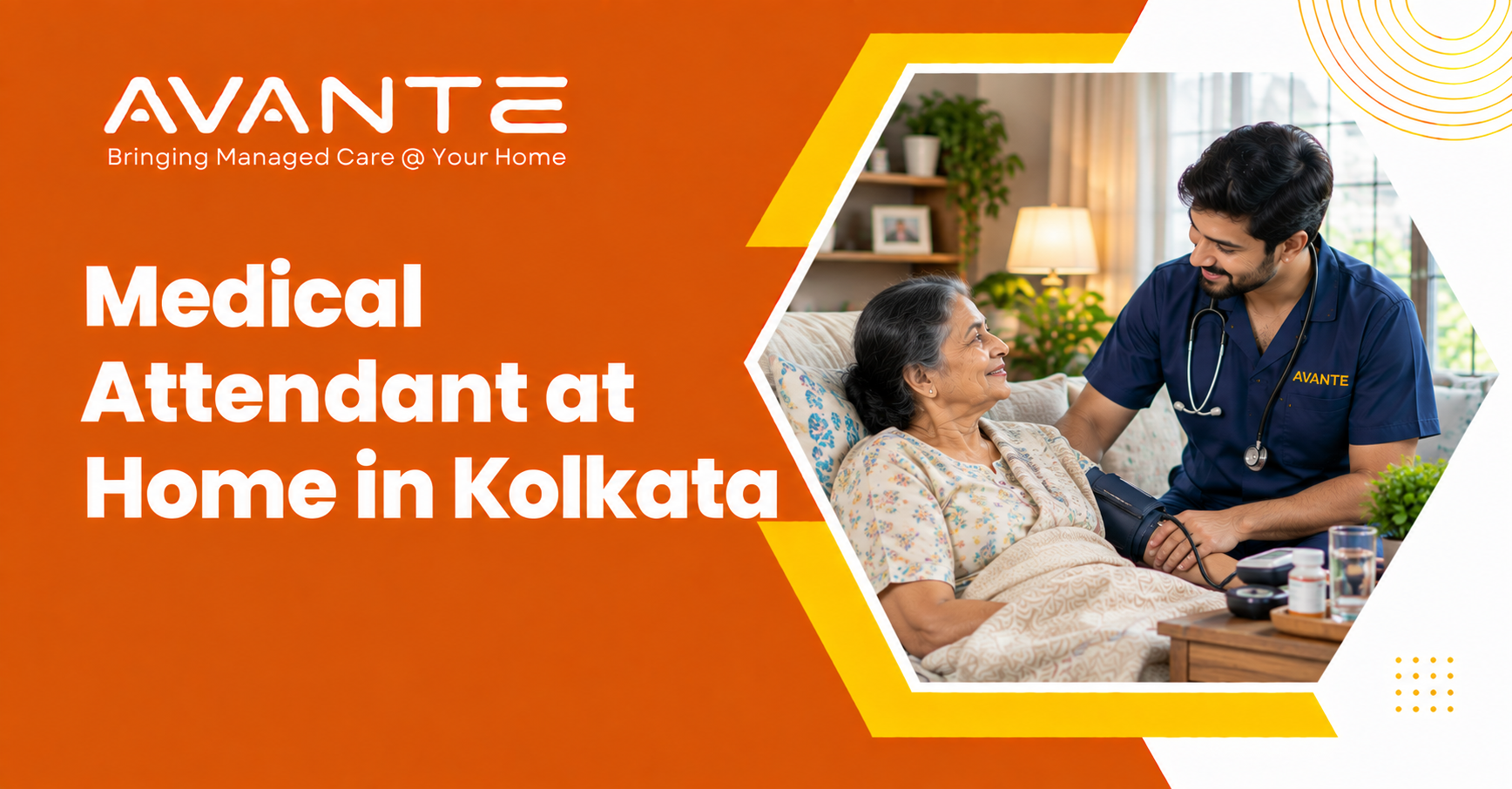
A medical attendant at home in Kolkata is a trained caregiver who assists with a patient’s medical and physical needs, mobility, hygiene, vitals monitoring, medication reminders, and wound or catheter care, under a structured routine, available on a schedule that includes day, night, or live-in shifts. Family care, by contrast, comes from relatives acting out of love and duty, usually without clinical training, fixed shifts, or backup coverage, which matters because illness and mobility issues don’t pause for a caregiver’s workday, sleep, or personal emergencies.
The distinction matters because caregiving involves two separate jobs: emotional support and clinical management. Family members are naturally equipped for the first. They are rarely equipped for the second, especially for tasks like recognizing early signs of bedsores, safely repositioning a bedridden patient every two hours, or knowing when a fever needs urgent medical attention rather than a home remedy. This gap shows up most clearly after a hospital stay, when discharge instructions typically involve specific clinical tasks, dressing changes, physiotherapy exercises, diet restrictions, and medication timing, that most relatives have never been trained to perform consistently.
Discharge from a hospital doesn’t mean recovery is complete; it means the responsibility has shifted to the home. This is the exact gap that post hospitalisation services at home in Kolkata are designed to close. Indian research backs this up: women in particular carry a disproportionate share of unpaid elder-care duties, often at real cost to their own employment, as IndiaSpend has reported.
Common gaps families face without trained support include:
- Missed or inconsistent medication schedules
- Incorrect handling of wounds, drains, or catheters after surgery
- Improper patient transfers, leading to falls or caregiver back injuries
- Delayed recognition of warning signs like breathlessness, confusion, or spiking fever
- Caregiver burnout from providing round-the-clock, untrained care
What Does a Trained Medical Attendant Actually Do at Home?
A trained medical attendant handles activities of daily living (bathing, feeding, mobility, toileting), monitors vital signs, assists with prescribed exercises, manages medication timing, and reports changes in condition to the family or treating doctor -functions that go beyond what most families can consistently manage alone.
This role sits between family involvement and full clinical nursing services in Kolkata. A medical attendant is not a substitute for a registered nurse when a patient needs injections, IV management, or complex wound dressing -those tasks require a qualified nurse. But for day-to-day support, mobility assistance, and monitoring, an attendant fills a gap that most households cannot fill safely on their own, particularly for:
- Elderly parents living alone or with working children
- Patients recovering from joint replacement, stroke, or major surgery
- Bedridden or partially mobile individuals needing daily physical assistance
- Families managing chronic conditions like diabetes or Parkinson’s disease
Caregiver research from India also points to a quieter cost of going it alone: family caregivers frequently report physical strain, disrupted sleep, and higher rates of stress-related health issues the longer full-time caregiving continues, according to studies on informal caregiving published in BMC Public Health. A trained attendant doesn’t just support the patient -it protects the health of the family member who would otherwise be carrying that load alone.
Medical Attendant vs Family Care: A Side-by-Side Comparison
| Factor | Family Care | Medical Attendant at Home |
| Clinical training | Usually none | Trained in patient handling, hygiene, and monitoring |
| Availability | Limited by work, health, other duties | Structured shifts, including night and live-in options |
| Consistency | Varies by family member’s schedule | Fixed routine for medication, exercise, meals |
| Risk of caregiver burnout | High, especially for sole caregivers | Shared load; family retains emotional role |
| Suitability for post-surgery care | Limited without training | Designed for structured recovery support |
| Cost | No direct cost, but income/time loss | Service fee, scaled to hours or live-in need |
Neither option is universally “better” -the right mix depends on the patient’s condition, the family’s availability, and whether the case needs basic support or closer-to-clinical supervision.
Medical Attendant vs Aya: What’s the Real Difference?
Many Kolkata families use the word “aya” loosely to describe any home caregiver, but an aya and a trained medical attendant are not interchangeable. An aya is typically hired informally, often through word-of-mouth or local placement contacts, with little to no verified clinical training -the role has traditionally centred on basic assistance like feeding, bathing, and keeping a patient company, rather than structured medical support.
A medical attendant, by comparison, is trained specifically in patient handling, hygiene protocols, vitals monitoring, and recognising warning signs that need medical attention. This distinction becomes critical for patients recovering from surgery, managing chronic conditions, or at risk of complications like bedsores or falls.
Key differences between an aya and a medical attendant include:
- Training verification: An aya’s background is rarely verified beyond informal references; a medical attendant is trained and typically vetted before placement.
- Scope of care: An aya generally handles basic personal care and companionship; a medical attendant additionally monitors vitals, manages medication timing, and reports condition changes.
- Accountability: Ayas hired informally often have no agency backing if something goes wrong; a medical attendant sourced through a home care provider comes with agency oversight and replacement support.
- Emergency preparedness: An aya may not recognise early warning signs of a medical emergency; a trained attendant is equipped to identify and escalate them promptly.
How Do You Choose Between Family Care, a Medical Attendant, and Nursing Services?
Choose based on the level of medical need: family care suits stable patients needing companionship and light help, a medical attendant suits patients needing daily physical assistance and monitoring, and professional nursing services in Kolkata suit patients needing injections, wound care, or other clinical procedures at home.
Ask these questions before deciding:
- Does the patient need help only with daily activities, or with actual medical procedures?
- Is a family member available consistently, including nights, without risking their own health or job?
- Has the treating doctor recommended structured post-hospitalization monitoring?
- Does the patient have a condition (stroke, fracture, major surgery) where incorrect handling could cause harm?
- Is the family already showing signs of caregiver strain or burnout?
If the honest answers point to inconsistent availability or tasks beyond basic help, a home care service in Kolkata that provides a trained attendant -with a registered nurse involved for clinical procedures -is usually the safer and more sustainable choice than stretching family members thin.
Common Mistakes Families Make When Choosing Home Care
- Assuming love is enough: Devotion doesn’t replace training for tasks like safe patient transfers or bedsore prevention.
- Waiting until a crisis: Many families only look for a home care service in Kolkata after a fall or complication, rather than planning care before discharge.
- Not verifying attendant training or agency background: Ask what training the attendant has received and whether a nurse supervises clinical tasks.
- Underestimating night care needs: Falls, confusion, and medical emergencies don’t follow daytime hours.
- Ignoring caregiver health: A family member who is exhausted or injured cannot provide safe care, however willing they are.
Conclusion
Family involvement will always matter for a patient’s emotional recovery, but it isn’t a substitute for trained clinical support. A medical attendant at home in Kolkata brings structured monitoring, consistent routines, and hands-on skills that most relatives simply haven’t been trained for, especially during the sensitive weeks after a hospital stay. Weigh the patient’s actual medical needs, your family’s realistic availability, and whether the situation calls for an attendant, a nurse, or both. If you’re planning care after an upcoming surgery or discharge, it’s worth speaking with a home care provider before the need becomes urgent rather than after.
Frequently Asked Questions
1. Is a medical attendant the same as a nurse?
No. A medical attendant assists with daily activities, mobility, and monitoring, while a registered nurse is qualified for clinical procedures such as injections, IV lines, and complex wound dressing. Many home care plans combine both roles.
2. How much does a medical attendant at home in Kolkata typically cost?
Costs vary by hours needed, whether care is live-in or shift-based, and the patient’s condition. It’s best to get a quote from a home care provider based on your specific case rather than relying on a fixed figure.
3. Is family care enough for a stable, mobile elderly parent?
Often yes, for companionship and light assistance. It becomes less sufficient once mobility drops, medical monitoring is needed, or the family caregiver shows signs of strain.
4. What should I look for before hiring a home care service in Kolkata?
Check the attendant’s training background, whether a nurse supervises clinical tasks, availability for night shifts, and how the agency handles emergencies or attendant replacement.
5. Are post hospitalization services at home in Kolkata suitable for stroke or surgery recovery?
Yes, these are among the most common reasons families use structured home care, since recovery often involves physiotherapy, medication schedules, and mobility support that need consistent, trained supervision.