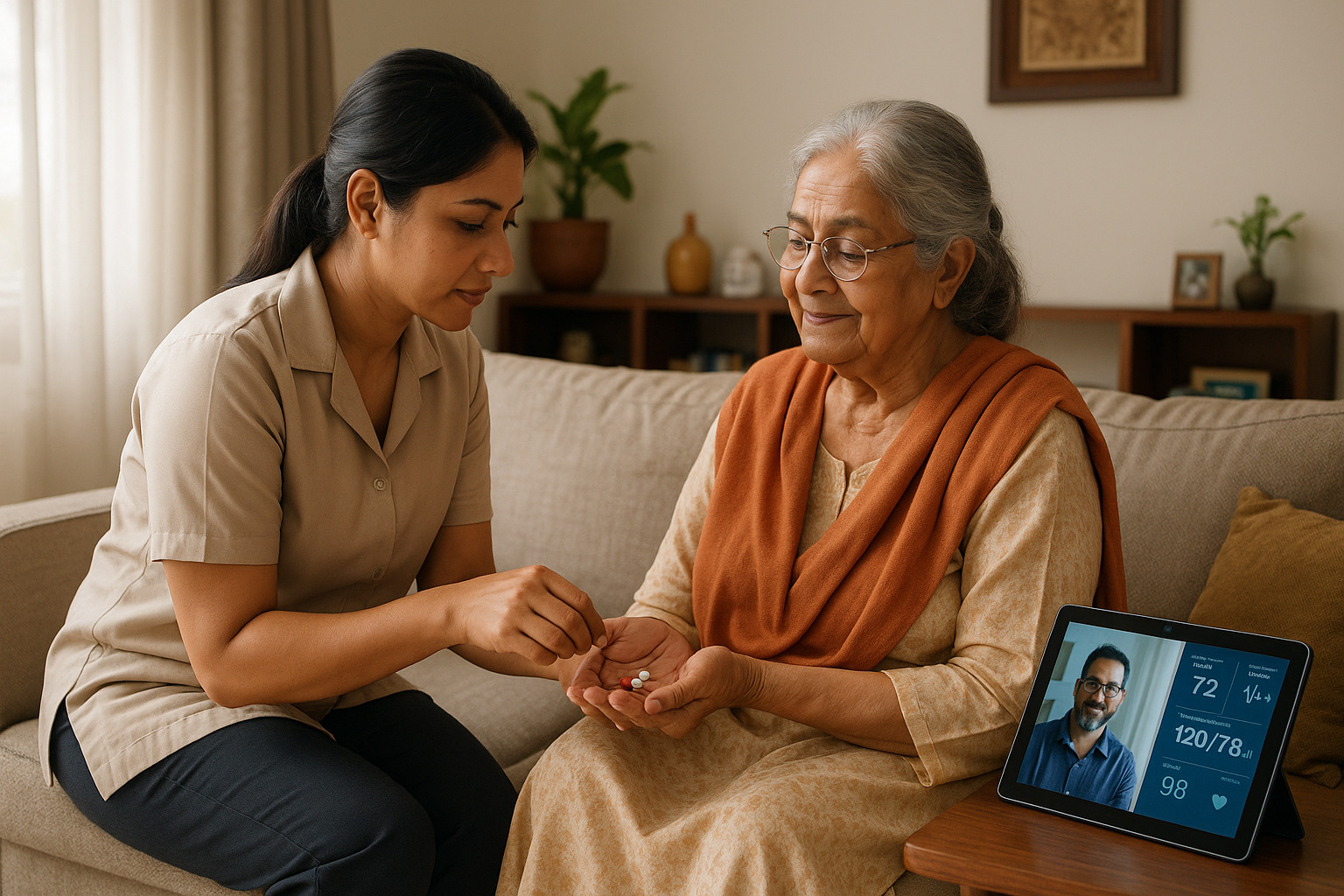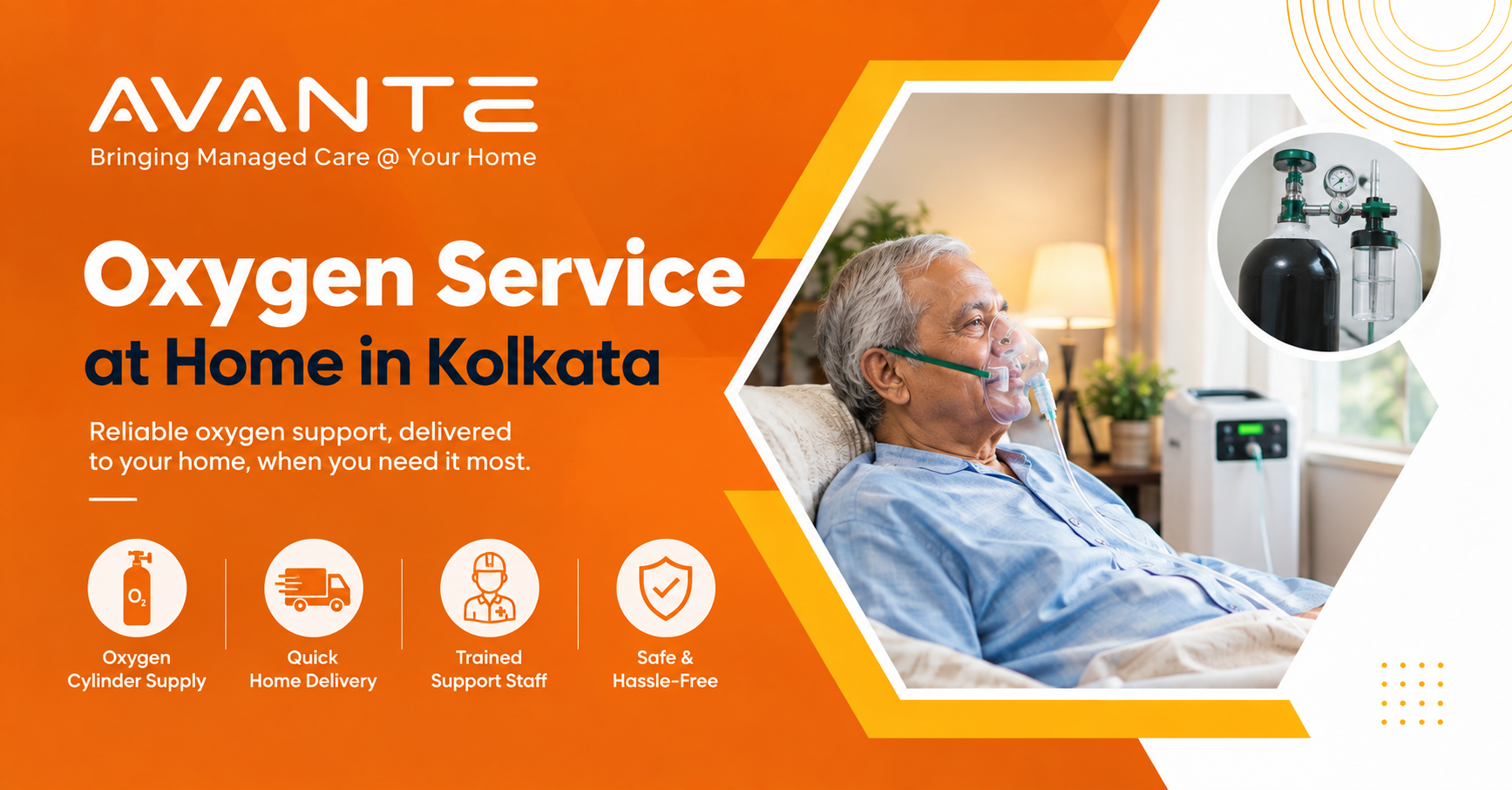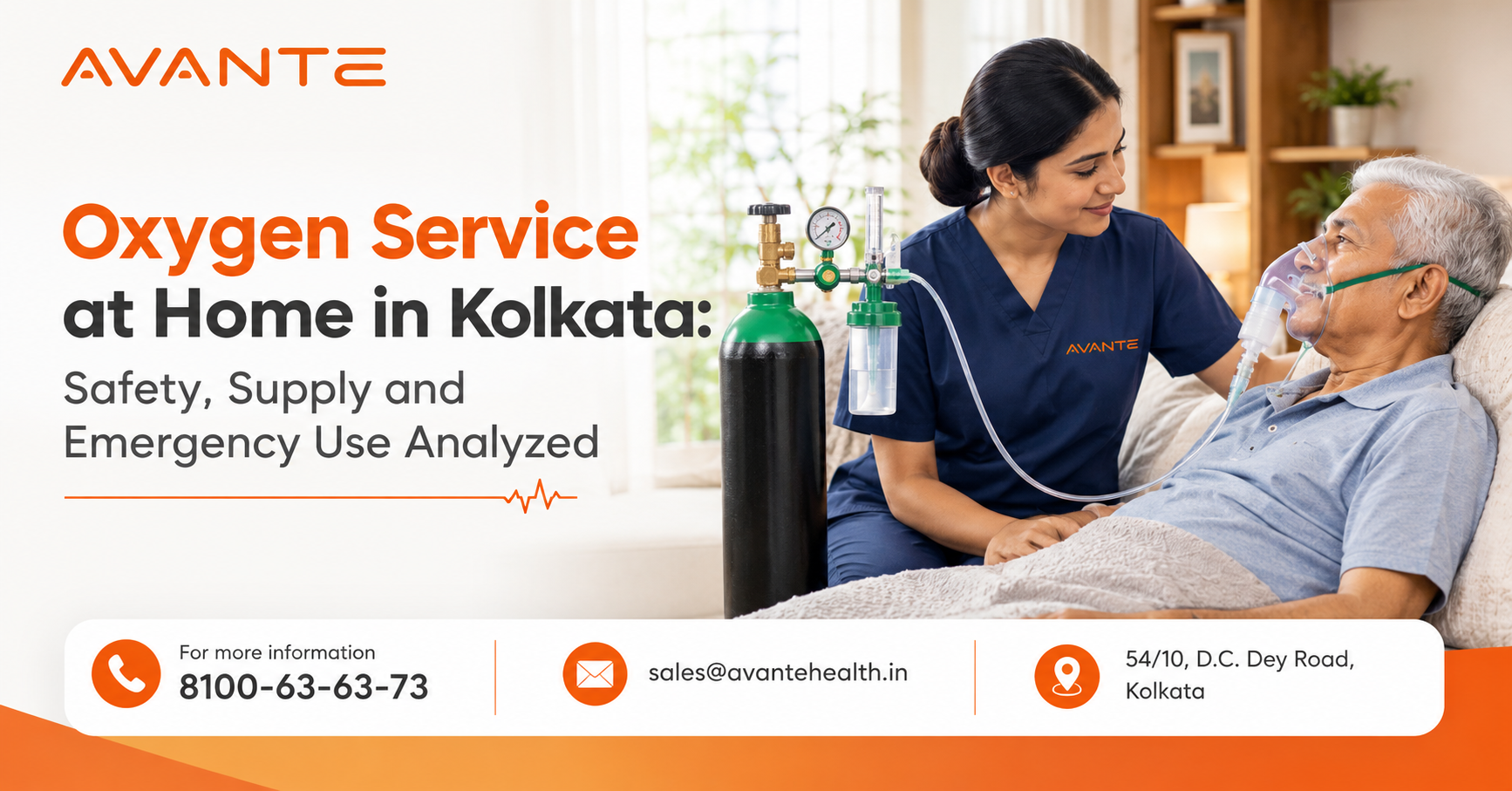
A 2019 Global Burden of Disease estimate puts India’s chronic obstructive pulmonary disease (COPD) cases at 37.8 million, and the country’s senior citizen population is projected to touch 230 million by 2036, according to the Press Information Bureau. Behind these numbers are real families in Kolkata trying to keep a parent or patient breathing comfortably at home, often without knowing where to start. Arranging a reliable oxygen service at home in Kolkata is no longer a niche need -it has become a practical, recurring decision for thousands of households managing respiratory illness, post-surgical recovery, or elderly care.
This guide is written for caregivers, home nursing teams and families who need clear, decision-ready information rather than generic advice. In this blog, you’ll discover how to choose between an oxygen concentrator and a cylinder, what to check before booking a supplier, how emergency oxygen delivery actually works, and which safety rules matter most -without wading through jargon or sales pitches.
Why More Kolkata Families Are Choosing Home Oxygen Support
Home-based respiratory care has grown for practical reasons: hospital beds are expensive, recovery is often faster in familiar surroundings, and India’s home healthcare market was valued at roughly USD 12,027 million in 2025, with projections to reach USD 18,818 million by 2030 at a 9.4% CAGR, according to MarketsandMarkets. Respiratory and oxygen-related care is one of the fastest-growing segments within that figure.
Three trends are driving this shift in Kolkata specifically:
- An ageing population. India’s elderly population (60+) is projected to reach around 230 million by 2036, per the PIB report on ageing in India. West Bengal, like much of eastern India, is seeing a steady rise in elderly-headed households that need in-home medical support.
- A heavy respiratory disease burden. COPD alone affects an estimated 37.8 million Indians, and chronic respiratory diseases account for nearly a third of the world’s related disease burden occurring in India, according to ICMR-backed research published via PMC.
- Rising preference for home care services in Kolkata over prolonged hospital stays, particularly for post-surgical recovery, palliative care and chronic illness management, where comfort, privacy and cost all favour the home setting.
Together, these factors explain why oxygen support, home nursing and attendant services are increasingly booked as a package rather than separately.
What Is Home Oxygen Therapy, and Who Actually Needs It?
Home oxygen therapy delivers medical-grade oxygen to a patient at home through a concentrator or cylinder, usually on a doctor’s prescription. It supports people with low blood-oxygen levels caused by COPD, pneumonia, post-COVID lung damage, heart failure, palliative conditions, or recovery after major surgery.
Oxygen therapy at home is never a self-prescribed choice. In India, medical oxygen is legally classified as a drug under the Drugs and Cosmetics Act, 1940, which means it requires a valid prescription and a treating doctor’s oversight, as noted in legal commentary on medical oxygen classification. A physician typically prescribes home oxygen after checking oxygen saturation (SpO2) levels with a pulse oximeter, usually when readings fall consistently below 94%, or based on arterial blood gas results for chronic patients.
Common situations where families in Kolkata seek home oxygen support include:
- Long-term oxygen therapy for COPD or advanced lung fibrosis
- Short-term support during post-COVID or post-pneumonia recovery
- Palliative and end-of-life comfort care
- Post-surgical recovery where mobility and breathing are temporarily compromised
- Cardiac patients with reduced oxygen circulation
Oxygen Concentrator vs Oxygen Cylinder: Which Should You Choose?
Oxygen concentrators suit patients who need continuous, long-term, low-to-moderate flow oxygen and have a stable power supply, since the device generates oxygen from room air indefinitely. Cylinders suit short-term, high-flow, or emergency needs, and situations with unreliable electricity, since they need no power but require periodic refilling through an oxygen cylinder service at home in Kolkata.
Both options are used widely by Kolkata home-care providers, and the right choice depends on the patient’s flow requirement, mobility, budget and power reliability.
| Factor | Oxygen Concentrator | Oxygen Cylinder |
| Power dependency | Needs continuous electricity; a problem during Kolkata’s monsoon power cuts | None -works independently of electricity |
| Best for | Long-term, stable daily use (COPD, chronic patients) | Short-term, emergency, or high-flow needs |
| Running cost | Lower over months; mainly electricity cost | Higher over time due to repeated refills |
| Flow rate | Typically, up to 5–10 LPM depending on model | Can deliver higher flow rates for acute cases |
| Portability | Portable models available but heavier with battery | Lightweight small cylinders are easy to move |
| Maintenance | Filters and sieve beds need periodic servicing | Requires regular hydro-testing and refilling |
| Setup time | Plug-and-use once configured | Needs a dependable oxygen supply near Kolkata for refills |
Many home nursing teams in Kolkata now recommend keeping a backup cylinder alongside a concentrator, specifically to cover power outages or sudden desaturation episodes. This hybrid approach is increasingly standard practice among experienced home care services in Kolkata.
How to Choose a Dependable Oxygen Supply Near Kolkata
A dependable home oxygen provider should offer same-day or emergency delivery, PESO-compliant cylinders, trained delivery staff, transparent pricing, and after-sales support such as equipment servicing and SpO2 monitoring guidance. Verify these before committing to a long-term plan.
Before booking any oxygen cylinder service at home in Kolkata, caregivers should evaluate providers against a short, practical checklist rather than relying on price alone.
Checklist before choosing a provider:
- Confirm the cylinder or concentrator meets Indian Standard IS 7285 (Part 2) specifications, as required for medical gas cylinders.
- Ask about delivery turnaround time, especially for night and weekend emergencies.
- Check whether trained staff set up the equipment and explain safe usage, rather than just dropping off the cylinder.
- Confirm cylinder sizes available (B-type for home use, D-type for higher-flow hospital-grade needs).
- Ask whether the provider also offers home nursing services near Kolkata, so oxygen support can be bundled with clinical monitoring.
- Verify pricing transparency -rental, refill, and deposit charges should be stated upfront, with no hidden costs.
Providers such as Avante Health have built their home-care model around exactly this kind of transparency -combining verified equipment, trained attendants and clear pricing so families aren’t left guessing during a medical emergency. Choosing a provider that pairs oxygen supply near Kolkata with broader home care services in Kolkata genuinely reduces the coordination burden on families already under stress.
Emergency Oxygen Service at Home in Kolkata: What to Do When Every Minute Counts
In a genuine emergency, call your treating doctor or nearest hospital immediately, start oxygen only if a device and prescription are already in place, monitor SpO2 continuously, and simultaneously contact a 24×7 emergency oxygen service at home in Kolkata for backup supply or a trained attendant, since desaturation can worsen quickly without warning.
Here is a practical sequence caregivers can follow when oxygen saturation drops suddenly:
- Check the pulse oximeter reading twice to rule out a faulty sensor before assuming an emergency.
- Call the treating physician or nearest hospital emergency line for guidance on flow rate and next steps.
- Start prescribed oxygen support if equipment is already available at home.
- Contact a 24×7 emergency oxygen service at home in Kolkata if the current cylinder is low, the concentrator has failed, or a higher flow rate is needed than what’s on hand.
- Keep the patient upright or semi-reclined, not flat, to ease breathing while help arrives.
- Arrange transport to hospital if SpO2 does not stabilize within a few minutes despite oxygen support.
This is precisely where response time separates a dependable partner from an average vendor. Families who have pre-registered with a responsive home-care partner like Avante Health typically report faster coordination during these moments, since the provider already has the patient’s address, prescription history and preferred equipment on file -removing one layer of panic from an already stressful situation.
Safety Rules and Regulations You Should Know
Medical oxygen in India is regulated as a drug under the Drugs and Cosmetics Act, 1940, and oxygen cylinders must comply with the Gas Cylinders Rules, 2016, enforced by the Petroleum and Explosives Safety Organisation (PESO), along with Indian Standard IS 7285 (Part 2) for cylinder specifications.
Following basic safety protocols at home matters as much as choosing the right equipment. Oxygen itself isn’t flammable, but it accelerates combustion dramatically, which makes handling discipline essential.
| Safety Rule | What It Means | Why It Matters |
| Keep cylinders upright and secured | Prevents valve damage or falls | A damaged valve can cause rapid, dangerous gas release |
| No open flames or smoking nearby | Oxygen-enriched air ignites far more easily | Even a small spark can cause serious fire |
| Store away from direct heat/sunlight | Heat increases internal cylinder pressure | Reduces risk of pressure-related failure |
| Use only PESO-compliant cylinders | Ensures cylinder meets hydro-testing standards | Confirms the cylinder is structurally safe for use |
| Never use oil or grease near fittings | Oxygen reacts violently with petroleum products | Prevents combustion at the valve or regulator |
| Keep a fire extinguisher nearby | Basic emergency preparedness | Reduces response time if an incident occurs |
Families should also ask their provider for written guidance on flow-rate settings, since incorrect oxygen dosing -too little or too much -can be harmful, particularly for COPD patients with chronic carbon dioxide retention. A reliable oxygen cylinder service at home in Kolkata will always include this guidance as part of setup, not as an afterthought.
Building a Complete Home Care Plan Beyond Oxygen
Oxygen support rarely works in isolation. Most patients who need it also need broader clinical supervision, which is why families increasingly look for providers offering home nursing services in Kolkata alongside equipment supply.
A well-rounded home care plan typically includes:
- Trained home nursing support for vitals monitoring, medication administration and wound care
- A home attendant for elderly in Kolkata households, for daily mobility assistance, feeding support and companionship
- Physiotherapy for post-surgical or post-stroke recovery
- Doctor tele-consultations for quick dosage or flow-rate adjustments
- Equipment maintenance, including periodic cylinder testing and concentrator filter checks
This is the layer where Avante Health stands out in the Kolkata market -by combining oxygen logistics with trained nursing staff and attendants under one coordinated plan, rather than requiring families to manage multiple vendors separately. For a parent recovering from a fracture who also has COPD, or a palliative-care patient who needs both oxygen and round-the-clock supervision, this kind of integration genuinely reduces caregiver fatigue.
If you’re currently evaluating a standalone provider, it’s worth comparing them against a service that can also support related needs -see our detailed guide to home nursing services in Kolkata and our dedicated page on elderly attendant care at home for a side-by-side view of what full-service home care looks like.
Conclusion
Choosing the right oxygen service at home in Kolkata comes down to three things: matching the equipment to the patient’s actual medical need, verifying the provider’s safety compliance and response time, and planning for emergencies before they happen rather than during one. A concentrator suits stable, long-term patients; a cylinder backs up emergencies and power cuts; and a provider offering both, alongside nursing and attendant support, removes most of the coordination stress from caregivers. Start by getting a clear prescription from your doctor, then shortlist providers using the checklist above rather than price alone. If you’d like help setting up a dependable, doctor-guided home oxygen and nursing plan, reach out to the Avante Health care team for a consultation tailored to your family’s situation.
Frequently Asked Questions
1: Which is better for home use: an oxygen concentrator or a cylinder?
A concentrator is generally better for long-term, stable daily use since it needs no refilling, while a cylinder is better for emergencies, high-flow needs, or areas with unreliable power. Many families in Kolkata keep both for complete coverage.
2: How much does home oxygen service cost in Kolkata?
Costs vary by equipment type, flow rate, rental versus purchase, and whether nursing support is bundled in. Concentrator rentals and cylinder refill charges differ by provider, so always ask for an itemized quote before committing.
3: Do I need a doctor’s prescription for home oxygen in Kolkata?
Yes. Medical oxygen is classified as a drug under the Drugs and Cosmetics Act, 1940, so a valid prescription based on SpO2 or blood gas readings is required before starting therapy at home.
4: What should I look for before booking an emergency oxygen service at home in Kolkata?
Check their average response time, whether cylinders meet IS 7285 (Part 2) standards, if trained staff handle setup, and whether they operate 24×7. These factors matter far more than price during an actual emergency.
5: Is home oxygen therapy safe for elderly patients living alone?
It can be, provided a trained home attendant or nurse checks on the patient regularly, flow rates are set correctly by a doctor, and an emergency backup plan is in place. Pairing oxygen support with a home attendant for elderly in Kolkata is strongly recommended for patients without a live-in caregiver.