88% of children aged 12–23 months in West Bengal were vaccinated against tuberculosis, diphtheria, pertussis, tetanus, polio and measles, according to NFHS-5. That still leaves roughly one in eight children behind. For older adults the gap is wider: a study of 64,714 Indians aged 45 and above found that only 1.5% had ever received an influenza vaccine and 0.6% a pneumococcal vaccine (Bulletin of the WHO). Behind these numbers are ordinary obstacles: a newborn too fragile for a long taxi ride, a bedridden parent who cannot be moved, a working couple out of leave days. Vaccination at home in Kolkata exists to remove those obstacles, but only if it is as safe as a clinic visit. In this guide, you’ll discover what a proper home-vaccination safety protocol includes, how it compares with clinic immunization, and how to book it with confidence, without guessing about cold chain, emergencies or cost.
What Is Vaccination at Home and Who Is It Really For?
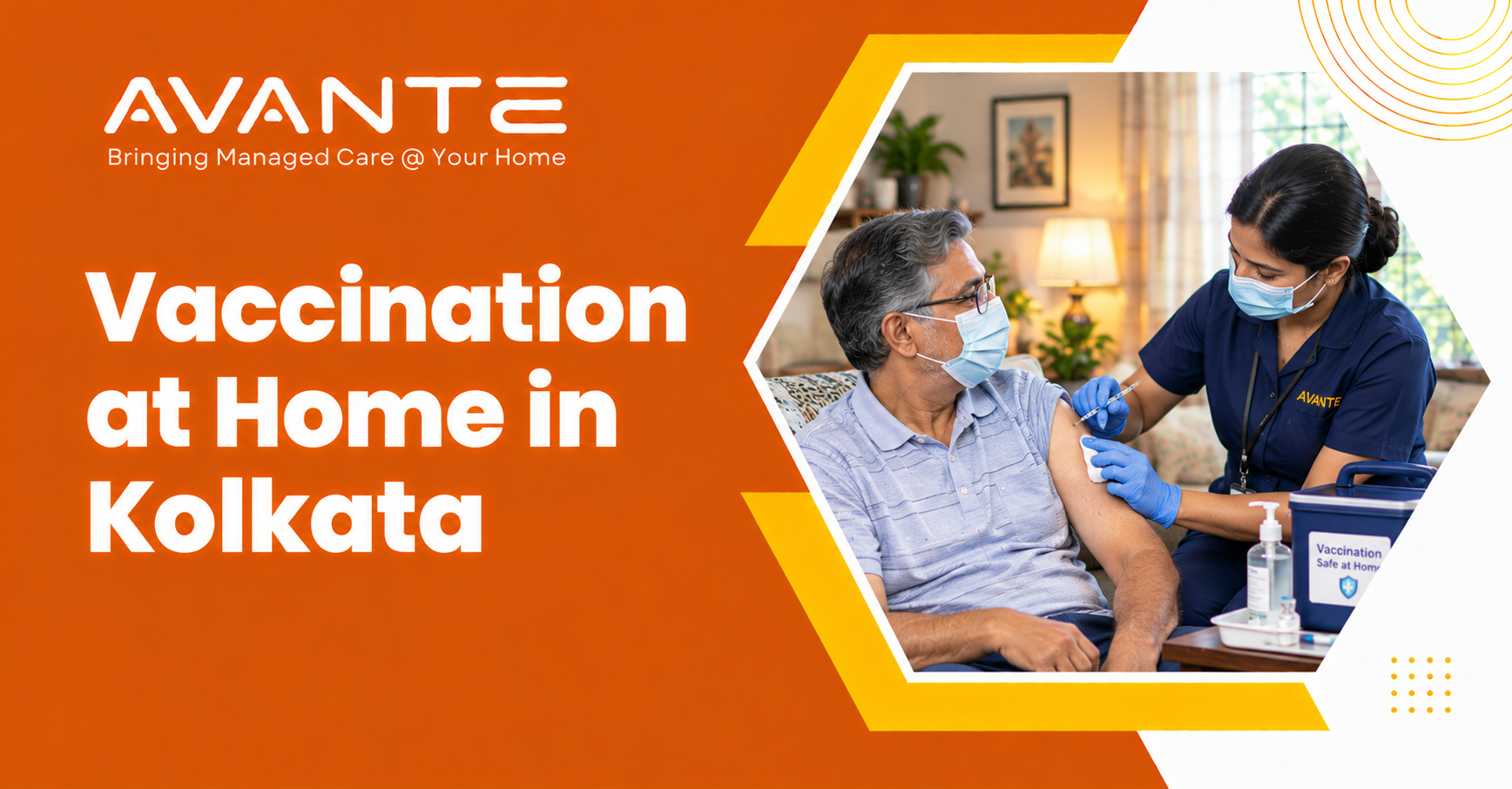
Vaccination at home means a trained nurse or doctor brings the vaccine, a cold-chain carrier and an emergency kit to your door, gives the dose, observes the patient and records it. It suits infants, older adults, bedridden patients and busy families. People at high risk of severe reactions are better vaccinated in a clinic.
The service solves a logistics problem, not a medical one. The vaccine, the schedule and the clinical standards stay the same. What changes is where the dose is given and who carries responsibility for storage, screening and emergencies. Families usually arrange it through a home care service in Kolkata, or through the pediatrician or physician who already treats the patient.
| Who | Why home vaccination helps | What to watch |
| New parents and infants | No crowded waiting rooms, no travel with a newborn, and feeding or sleep routines stay intact. | Birth doses are usually given at the hospital, so home visits typically begin with later doses. |
| Elderly people | Avoids stairs, long waits and transport, which are real barriers for frail seniors. | Ask the physician about heart, lung or kidney conditions before booking. |
| Bedridden and post-surgery patients | Moving them for a routine injection can cost more than the injection is worth. | Stable condition matters. Acute illness is a reason to postpone. |
| Working professionals | One visit can cover boosters for several family members. | Keep your vaccination record handy so the nurse can check gaps. |
Is Vaccination at Home Safe? What a Proper Safety Protocol Includes
Home vaccination is safe when it copies clinic standards: a verified vaccine kept at 2–8°C, a pre-vaccination health check, an adrenaline-based emergency kit, at least 15 to 30 minutes of observation, and written records. Serious allergic reactions are rare, about 1–2 cases per million doses, but preparation decides the outcome.
The rarity figure comes from a state family welfare department training document on managing anaphylaxis after vaccination, which also stresses that an anaphylaxis kit with adrenaline, syringes and needles must be on hand wherever vaccines are given. The same logic applies at your front door. Cold chain matters just as much: India’s immunization programme runs on roughly 27,000 cold chain points, according to the Ministry of Health and Family Welfare, because heat or freezing can quietly destroy a vaccine’s potency.
The eight-step home vaccination protocol
- Schedule check. The doctor or nurse confirms age, previous doses, current illness and known allergies before anything is opened.
- Verified vaccine. Ask for brand name, batch number and expiry date. The vial should be sealed and unexpired.
- Cold chain. Vaccines travel in an insulated carrier with ice packs and stay at 2–8°C. Ask how the carrier was packed. The national immunization guidelines treat the cold chain as the backbone of vaccine safety.
- Pre-vaccination screening. The nurse checks temperature and asks about fever, medicines and any past reaction to a vaccine.
- Correct administration. The right site, route and dose, given by a nurse at home in Kolkata who is trained in injections and in recognizing reactions.
- Observation. Most anaphylaxis begins within 30 minutes. The Canadian Immunization Guide advises at least 15 minutes of observation and 30 minutes when there is a specific allergy concern.
- Emergency readiness. Adrenaline, syringes, a written plan for the nearest hospital and a working phone line before the visit starts. If the patient uses oxygen, check that the oxygen cylinder at home in Kolkata is full and the regulator works.
- Documentation. The vaccination card or digital record is updated, and any reaction is noted and reported.
Vaccination at Home vs Clinic Immunization: Which Is Better?
Neither is better for everyone. Home vaccination wins on convenience and comfort for infants, seniors and bedridden patients. Clinics win on immediate access to doctors, equipment and hospital referral. A well-run home service narrows the gap, while high-risk patients should still choose a clinic or hospital.
| Factor | Vaccination at home | Clinic or hospital |
| Convenience | Visit at your door. Suits mobility-limited patients. | Travel, parking and queues are part of the visit. |
| Waiting-room exposure | None. Only the household is present. | Shared waiting areas with other patients. |
| Emergency response | Depends on the kit and the nurse’s training. Hospital transfer takes time. | Doctors, equipment and monitoring are on site. |
| Cold chain control | Relies on the carrier and the provider’s discipline. Ask to see it. | Dedicated refrigerators with temperature logs. |
| Observation period | Family must stay home for 15–30 minutes after the dose. | Built into the clinic visit. |
| Cost | Vaccine price plus a visit fee. Ask for an itemized quote. | Vaccine price plus consultation fee. Government UIP vaccines are free at public centres. |
| Records | Provider should update your card and give a written summary. | Usually routine, with systematic records. |
| Best for | Infants, seniors, bedridden patients, busy families. | Anyone with a past severe reaction or unstable health. |
When a clinic or hospital is the safer choice
Health authorities advise vaccinating people with a history of severe vaccine allergy in a facility with medical staff, and observing them longer. Treat the following as reasons to talk to your doctor before choosing home service:
- A previous severe allergic reaction to a vaccine or an ingredient.
- Moderate or severe illness or high fever on the day.
- An unstable chronic condition, or a doctor’s request for closer monitoring.
- A provider who cannot show an emergency kit or explain how vaccines are stored.
Which Vaccines Fit Which Age? Children and Adults
India’s Universal Immunization Programme covers children from birth, with doses at 6, 10 and 14 weeks, 9–12 months, 16–24 months and school age. Adults, especially seniors, rely on doctor-recommended vaccines such as influenza and pneumococcal, which sit outside the free national schedule. Always confirm the current schedule with your pediatrician.
The table below summarizes the childhood schedule as described by the Ministry of Health and Family Welfare. Schedules are revised over time, so treat it as a planning aid, not a prescription.
| Age | Vaccines under the national schedule |
| At birth | BCG, oral polio (zero dose) and hepatitis B, with hepatitis B ideally within 24 hours. |
| 6, 10 and 14 weeks | Pentavalent (diphtheria, pertussis, tetanus, hepatitis B, Hib), oral polio and rotavirus. Fractional IPV at 6 and 14 weeks, and pneumococcal conjugate vaccine at 6 and 14 weeks. |
| 9–12 months | Measles-rubella first dose and a pneumococcal booster. |
| 16–24 months | Measles-rubella second dose, plus DPT and oral polio boosters. |
| 5–6 years and later | DPT booster at 5–6 years, then Td at 10 and 16 years. |
For adults the picture is different. The WHO Bulletin study found that coverage of influenza, pneumococcal, typhoid and hepatitis B vaccines was below 2% among adults aged 45 and above, and that uptake was higher in people with heart disease, diabetes or lung disease. An ICMR call for research notes that Indian geriatric and physician bodies have issued guidelines favoring pneumococcal and influenza vaccination for older adults. If you care for a senior, ask their doctor which adult vaccines apply, then plan the visit at home.
How Home Care Support Fits In: Nurse, Oxygen and Care Plans
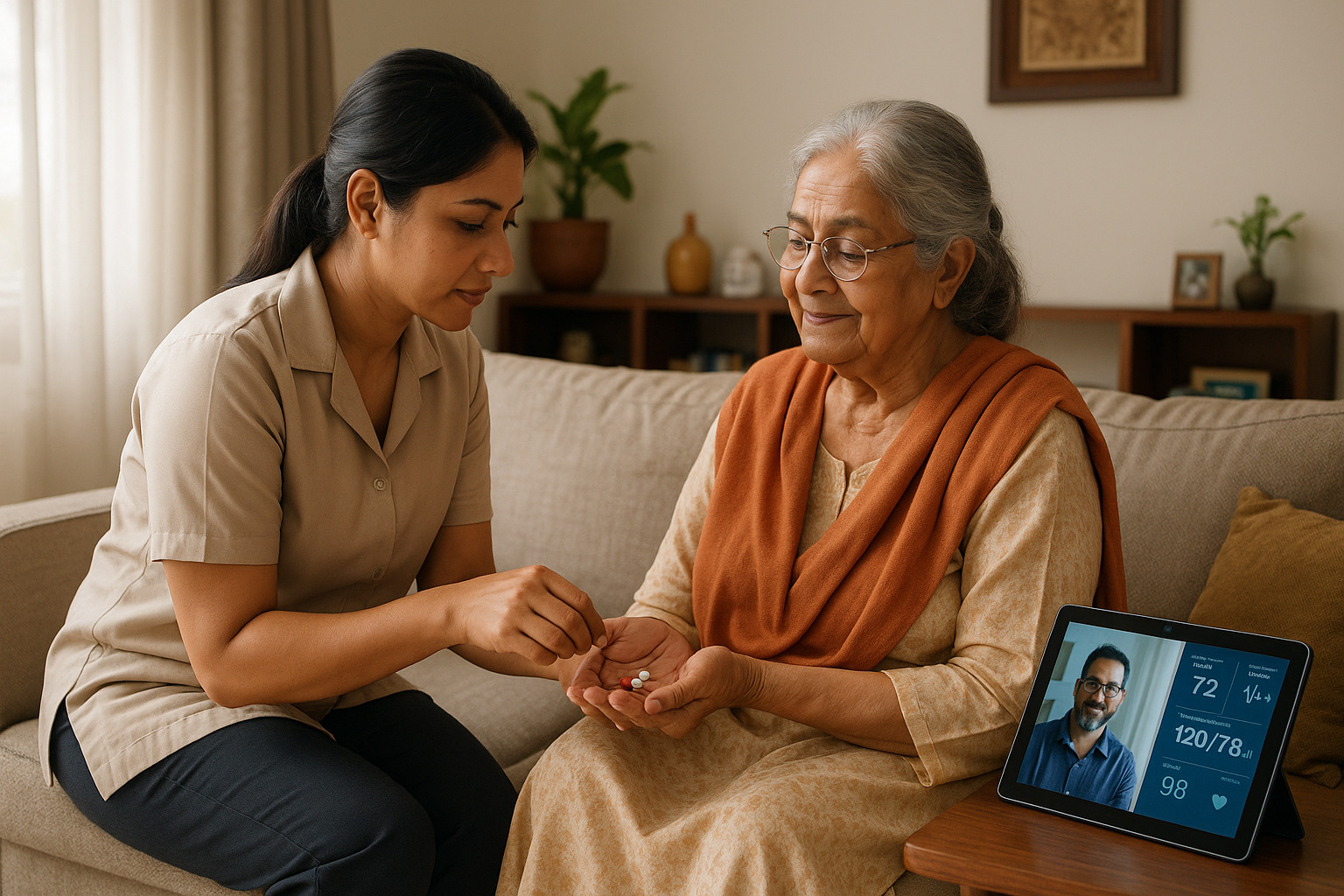
A trained nurse can give the vaccine, check vital signs, record reactions and call a doctor if something looks wrong. The safest set-up has physician oversight, an adrenaline kit and written records. Equipment such as oxygen is supportive backup only, because adrenaline remains the first-line treatment for anaphylaxis.
Vaccination is rarely the only need in a household with a bedridden or elderly patient. Many families already use a home care service in Kolkata for dressing, injections or monitoring. Bundling vaccination into that care plan keeps the same trained person who already knows the patient’s history.
| What to check | What to ask | Why it matters |
| Nurse credentials | Valid nursing registration and experience giving injections to your patient’s age group. | A trained nurse spots a reaction early. |
| Physician oversight | Is a doctor reachable by phone during and after the visit? | Someone must decide quickly if a reaction occurs. |
| Emergency kit | Does it contain adrenaline, syringes and needles? Is it within expiry? | Adrenaline is the lifesaving drug in anaphylaxis. |
| Oxygen backup | For lung or heart patients, is an oxygen cylinder at home in Kolkata already set up and working? | Supports breathing while help arrives. It does not replace adrenaline. |
| Records and follow-up | Will you get a written record and a check-in call the next day? | Protects your vaccination history and catches late reactions. |
What to Expect After the Dose: Normal Reactions vs Warning Signs
Soreness, redness at the injection site, mild fever and fussiness are common after vaccination and usually settle within a day or two. Difficulty breathing, swelling of the face or lips, widespread hives, limpness or collapse need emergency help immediately. Call the doctor for any fever or symptom that persists or worries you.
Common, minor reactions are well described in India’s immunisation guidelines for programme managers, which also explain how reactions are monitored and reported. A home provider should explain this list before leaving, not after you call with a worry.
| Symptom | What it usually means | What to do |
| Pain, redness or a small lump at the injection site | A common local reaction. | Use a cool, clean cloth. Do not massage the area. |
| Mild fever, irritability or sleepiness | A common, short-lived response to the vaccine. | Offer fluids and rest. Ask the doctor before giving any medicine, especially to infants. |
| Fever that is high, lasts more than a day or two, or comes with unusual drowsiness | Needs a clinician’s opinion. | Call the provider or paediatrician the same day. |
| Trouble breathing, swollen lips or face, widespread hives, limpness or collapse | Possible severe allergic reaction. | Treat as an emergency. Use the adrenaline kit if the nurse is present, and call an ambulance. |
Ask the provider to report any significant reaction as an adverse event following immunization. Reporting is how health systems learn about rare problems, and it also gives your own doctor a clear record for future doses. Keep the batch number and the date of the dose in the same place as the vaccination card, because both will be needed if a question comes up later.
Plan the day around the dose, too. Schedule the visit when a second adult is home, keep the evening free from travel, and avoid booking back-to-back appointments. A calm hour after vaccination is the cheapest safety measure on this list.
How to Book Vaccination at Home in Kolkata, Step by Step
Confirm the vaccine and schedule with your doctor, choose a provider that can show its kit and cold-chain process, ask for batch and expiry details, keep a second adult at home, and stay for the full observation period. Then make sure your vaccination record is updated before the nurse leaves.
- Confirm what is due. Check the card against the schedule with your pediatrician or physician.
- Shortlist providers. Prefer services that name a supervising doctor, describe their emergency process in writing and tell you who the nurse at home in Kolkata will be.
- Request details in advance. Ask for vaccine brand, expected total cost and what happens if there is a reaction.
- Prepare the patient. Note allergies and current medicines. Make sure the patient has eaten and is hydrated.
- Be present for the full observation window. Keep a phone nearby and the hospital route in mind.
- Follow up. Watch for fever, swelling or unusual drowsiness and call the provider or doctor if worried.
Common mistakes to avoid
- Choosing on price alone, without asking how vaccines are stored.
- Accepting vaccines carried in an ordinary bag without ice packs.
- Skipping the observation period because the patient looks fine.
- Forgetting to mention past allergies or current illness.
- Leaving without an updated vaccination record.
Conclusion
Choosing between home and clinic is a question of risk, not just comfort. For most infants, seniors and bedridden patients, vaccination at home in Kolkata is a safe and practical option when it follows a clear protocol: verified vaccines, cold chain, screening, an adrenaline-ready kit, observation and records. Anyone with a history of severe reactions should stay with a clinic or hospital. Your next step is simple: ask your doctor what is due, then request a written protocol from your preferred home care service in Kolkata before you book. Contact Avante Health to enquire about vaccination at home, confirm service availability and understand the safety steps followed before scheduling a visit.
FAQs About Vaccination at Home in Kolkata
1. Is home vaccination safe for newborns?
It can be, once your pediatrician agrees. Birth doses are usually given at the hospital, and later visits can be handled at home when the baby is well and the provider follows the full protocol.
2. How much does vaccination at home cost?
Cost depends on the vaccine and the visit fee, so no single figure applies. Ask for an itemized quote. Government vaccines under the national schedule are free at public centres, while home visits generally involve vaccines bought privately.
3. Can bedridden or elderly patients get flu and pneumococcal vaccines at home?
Yes, provided their doctor approves. These vaccines are recommended by Indian geriatric and physician bodies, yet uptake remains below 2% among adults aged 45 and above, so a home visit can close a real gap. For patients with lung disease, have the oxygen cylinder at home in Kolkata checked before the visit.
4. What happens if there is a reaction at home?
Mild soreness or low fever is common and usually passes. For signs of a serious allergic reaction, such as breathing difficulty or swelling, the nurse gives adrenaline from the kit and arranges hospital transfer. Anyone treated for anaphylaxis needs hospital observation afterwards.
5. What should I check before booking a nurse at home in Kolkata for vaccination?
Check registration, experience with injections, the emergency kit, cold-chain handling, a reachable doctor and written records. If a provider cannot answer these clearly, choose another.