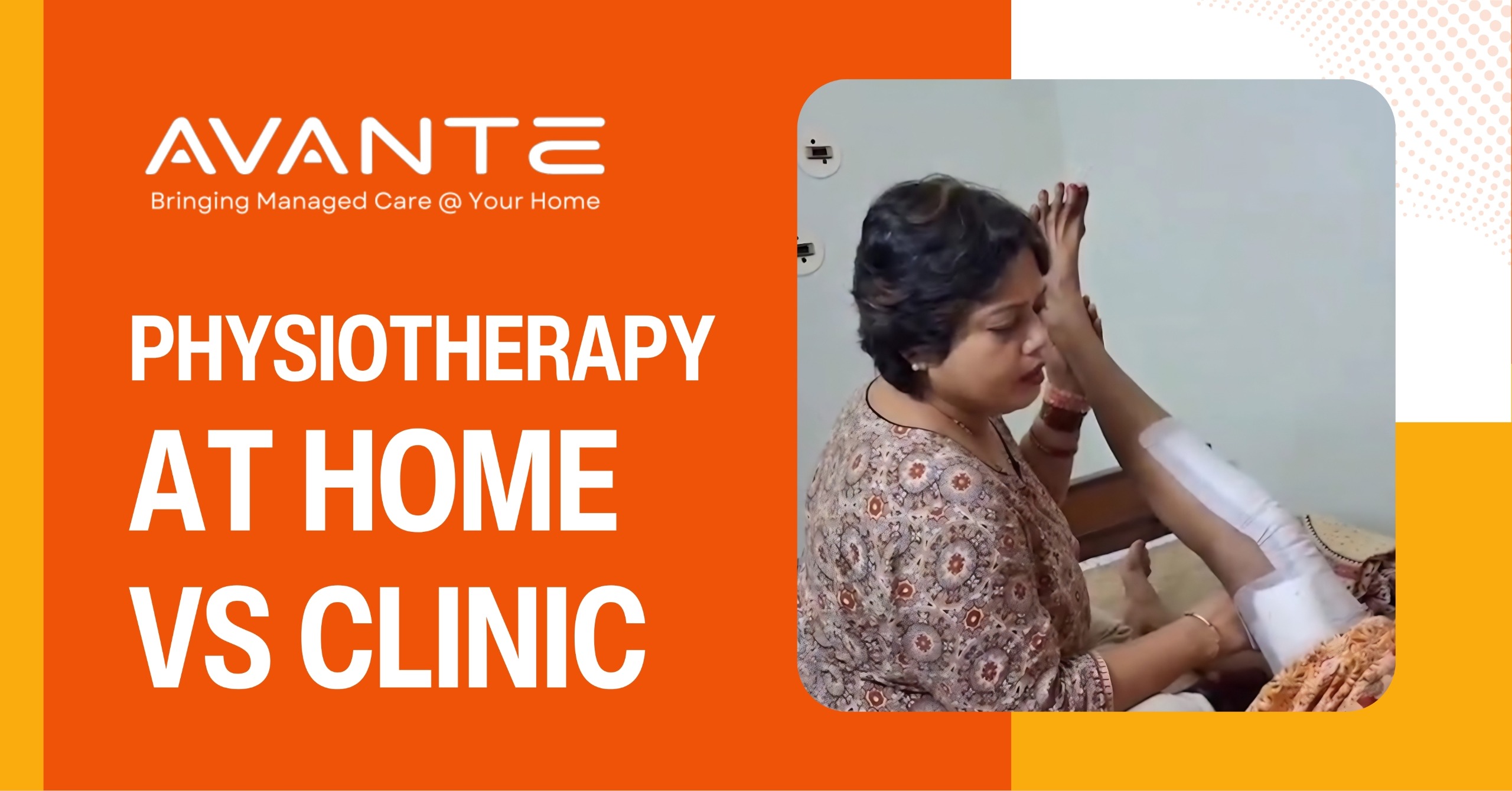
Knee and back pain rarely stay a ‘minor’ problem. A community-based study across five Indian sites found that 28.7% of participants had knee osteoarthritis (PMC, Indian Journal of Orthopaedics-linked study). A meta-analysis of Indian studies puts the lifetime prevalence of low back pain at 66% (Work journal). For many Kolkata families, the real question is not ‘what is wrong?’ but ‘how long will recovery take, and can we manage it at home?’
If a parent cannot climb stairs, a relative has just had a knee replacement, or you sit ten hours at a desk with a stiff spine, travelling to a clinic three times a week is hard. That is why knee pain physiotherapy at home in Kolkata has become a practical choice for many households.
In this blog, you’ll discover realistic recovery timelines for knee and back conditions, how home rehab compares with clinic visits, and how to choose the right provider -without guesswork or unrealistic promises.
What Causes Knee and Back Pain? Know Your Risk Factors
Knee and back pain usually build up from a mix of age, body weight, past injury, and daily habits. Knowing which factors apply to you helps your physiotherapist set a realistic recovery plan and reduces the chance of the pain returning.
For the knee, an Indian community study found that osteoarthritis prevalence rose as body mass index increased. A study of middle-aged women in Kerala linked knee osteoarthritis to increasing age, menopause, family history, BMI above 30, and earlier knee injury (IJCMPH).
For the back, risk is shaped by who you are and how you work. The pooled Indian data show the highest rates among women, rural populations, and manual workers. One cross-sectional survey of 1,532 adults reported a lifetime prevalence of 65% in women versus 47% in men (ISPOR abstract).
The practical lesson is simple. Long sitting hours, extra weight, weak thigh and core muscles, and untreated old injuries all add load to the joints. A good therapist addresses these causes, not just the pain.
How Long Does Knee Pain Physiotherapy at Home Take?
After a total knee replacement, formal physiotherapy usually lasts two to three months, and full recovery can take up to 12 months. For non-surgical knee pain such as osteoarthritis, progress depends on severity, body weight, and consistency. A physiotherapist sets the timeline after a proper assessment.
The table below shows a typical post-knee-replacement journey. Your surgeon’s protocol always comes first.
| Phase | Typical timeframe | Main goals | What home physiotherapy focuses on |
| Early recovery | Weeks 1–2 | Control swelling and pain; stand and walk with support; reach about 60–70 degrees of knee bend | Ankle pumps, gentle bends, safe transfers |
| Building movement | Weeks 3–4 | Reach about 90 degrees of bend; wean off walker or crutches | Range-of-motion work, walking practice |
| Building strength | Weeks 5–8 | Reach 110–120 degrees; stronger quadriceps and hamstrings | Resistance exercises, balance training |
| Functional recovery | Weeks 9–12 | Stairs, longer walks, daily routines | Task-based training, fall prevention |
| Long-term gains | 3–12 months | Continued strength and confidence | Self-managed exercise programme |
What about knee arthritis without surgery?
For osteoarthritis, physiotherapy aims to reduce pain, strengthen the muscles around the joint, and improve walking. Progress is gradual. Weight, previous injuries, and how regularly you do your exercises all matter. Most patients need a supervised phase first, followed by a home exercise routine they continue long term.
How Long Does Back Pain Physiotherapy at Home Take?
Back pain is grouped by duration: acute (under 6 weeks), subacute (6–12 weeks), and chronic (over 12 weeks). Staying active helps early on. Structured exercise is the main physiotherapy tool for subacute and chronic pain. Timelines depend on the cause and your response.
This matters because back pain physiotherapy at home in Kolkata looks different at each stage.
| Stage | Duration | What the evidence supports | Home physiotherapy approach |
| Acute | Under 6 weeks | Continuing normal activity beats enforced bed rest | Education, gentle movement, posture advice |
| Subacute | 6–12 weeks | Therapeutic exercise rated Grade A for improving pain and function | Graded exercise, mobility work |
| Chronic | Over 12 weeks | Exercise rated Grade A; core stabilisation and McKenzie exercises are widely used | Core strengthening, ergonomic changes |
| After spine surgery | Surgeon-led | Exercise rated Grade A for pain after prior back surgery | Surgeon-approved, step-by-step rehab |
Back pain is not minor in India. A recent analysis describes it as the second most common cause of years lived with disability in the country, after iron deficiency anaemia (Cureus, 2025).
When to skip home care and see a doctor first: back pain with leg weakness, numbness around the groin, loss of bladder or bowel control, fever, or pain after a fall needs urgent medical review.
Is Physiotherapy at Home as Effective as Going to a Clinic?
For knee replacement rehabilitation, research shows home-based physiotherapy delivers results similar to clinic-based care. A 2025 meta-analysis of 20 randomized trials and 3,706 patients found no differences across pain, function, and range of motion. Quality of supervision still matters.
That finding comes from the 2025 meta-analysis in Prosthesis. An earlier systematic review also found no significant differences in range of motion or patient-reported knee scores. The authors do flag variation between studies, so results are encouraging rather than absolute.
For families, this makes physiotherapy at home in Kolkata a reasonable option rather than a compromise. Here is how the two formats compare in daily life.
| Factor | Home physiotherapy | Clinic or hospital outpatient |
| Travel | None; helpful in Kolkata traffic and for people with limited mobility | Needed for every visit |
| Attention | One-to-one in your own space | Often shared with other patients |
| Equipment | Portable tools; limited for advanced machines | Wider range of machines |
| Real-life practice | Stairs, bathroom, bed, and kitchen can be assessed | Simulated environment |
| Family involvement | Caregivers can watch and learn | Caregivers often wait outside |
| Best for | Post-surgery, elderly, mobility-limited, busy professionals | Patients needing specialised equipment |
Who Benefits Most from Home Physiotherapy?
Home physiotherapy suits people who find travel painful, risky, or tiring. This includes older adults, patients recovering from knee or spine surgery, and people with arthritis. It also helps busy professionals who cannot spare commute time.
| Patient group | Why home care helps | What to watch for |
| Elderly individuals | Lower fall risk than travelling; safer practice in familiar surroundings | Needs a gentle, slow progression |
| Post-knee-replacement patients | Early, frequent sessions without painful trips | Follow the surgeon’s range-of-motion limits |
| Post-spine-surgery patients | Surgeon-guided, careful movement at home | Never self-progress exercises |
| Corporate desk workers | Fits around work; workstation advice is possible | Needs ergonomic and habit changes |
| Chronic lower back pain | Regular supervised sessions improve consistency | Plan should progress, not stay the same |
| Arthritis or osteoarthritis | Joint-friendly strengthening in comfort | Flare-ups need plan adjustment |
| Sports injury recovery | Early rehab with return-to-play goals | May need clinic equipment later |
| Limited mobility | Care reaches the patient | Combine with caregiver support |
There is also a family angle. A Kolkata caregiver who can watch each session learns the exercises, the safe way to assist, and which symptoms need a call to the doctor.
How to Choose a Physiotherapy at Home Service in Kolkata
Choose a physiotherapy at home service in Kolkata that begins with a full assessment, follows your surgeon’s instructions, sets measurable goals, and reviews progress regularly. Avoid anyone who promises a fixed cure date or applies the same exercise sheet to every patient.
Use this checklist before you book:
- A proper first assessment. The therapist should ask about your history, scans, surgery details, medicines, and daily routine.
- Clear, measurable goals. Examples include knee bend in degrees, walking distance, or the ability to climb stairs.
- Coordination with your doctor. Post-surgery rehab should match your surgeon’s protocol.
- Progress reviews. A plan that never changes is a red flag.
- Written home exercise plan. You should know what to do between sessions.
- Transparent pricing. Ask for session length, frequency, and total estimated duration in advance.
Here is a simple process to follow:
Step 1 -Share your diagnosis, reports, and surgeon’s notes.
Step 2 -Book an initial assessment at home.
Step 3 -Agree on goals, session frequency, and expected review points.
Step 4 -Practice the exercise plan daily, not just on session days.
Step 5 -Review progresses every few weeks and adjust the plan.
Common mistakes to avoid: stopping after pain eases, skipping home exercises, pushing for a ‘target angle’ too fast, and choosing only on price.
Beyond Exercises: Home Care Support That Speeds Up Recovery
Recovery depends on more than exercise. Safe movement, medicine routines, hydration, and fall prevention also matter. This is where home care services in Kolkata and a trained medical attendant at home in Kolkata can support the physiotherapist’s plan.
Think of the first weeks after knee or spine surgery. Getting out of bed, using the bathroom, and following medication timings can be difficult for an elderly patient living with family members who work. A medical attendant at home in Kolkata can assist with mobility, daily routines, and observations the family can share with the physiotherapist.
This is where an integrated provider such as Avante Health can be convenient. Instead of arranging therapy and care support separately, families can look for home care services in Kolkata that bring physiotherapy, attendant support, and follow-up under one roof. The goal is a consistent, well-coordinated recovery experience in the comfort of your own home.
What Affects Your Recovery Timeline?
Age, body weight, other health conditions, pre-surgery fitness, and how regularly you exercise all change the pace of recovery. Two patients with the same surgery can progress very differently, so treat any timeline as a guide, not a deadline.
Research gives a few useful pointers. In the five-site Indian study mentioned earlier, knee osteoarthritis became more common as body mass index (BMI) increased. A hospital-based study of people with type 2 diabetes found knee osteoarthritis in 46.3% of patients (Journal of Clinical and Diagnostic Research). Weight and blood sugar control therefore deserve attention alongside exercise.
| Factor | How it can affect recovery | What you can do |
| Age and general health | Healing and strength gains may be slower | Start gently; share your full medical history |
| Body weight | Extra load on knee and spine joints | Combine rehab with sensible weight management |
| Pre-surgery fitness | Exercise before surgery (‘prehabilitation’) can help early recovery | Ask your surgeon about a pre-operative programme |
| Diabetes and other conditions | Can influence healing and joint health | Keep medical reviews on schedule |
| Consistency | Skipped exercises slow progress | Follow a written daily plan |
| Pain tolerance and fear of movement | May limit range of motion | Use graded goals and clear explanations |
Recovery also varies in daily activity. One study of physical activity after knee replacement found that only about one-third of participants had regained their pre-surgery step count by six weeks. Slow weeks are common and not a sign of failure.
How to Prepare Your Home Before Rehabilitation Starts
A safe home speeds up rehabilitation. Clear walkways, add grip in the bathroom, arrange seating at the right height, and keep daily items within easy reach before the patient returns from hospital.
Home rehab works best when the environment supports it. Many Kolkata homes have narrow lanes, steps at the entrance, slippery bathroom floors, and floor-level seating or toilets. These details matter after surgery. Ask your surgeon and physiotherapist which movements, such as deep squatting or sitting cross-legged, to avoid and for how long.
- Walkways: Remove loose rugs, wires, and clutter between bed, bathroom, and living area.
- Bathroom: Use non-slip mats and grab bars; consider a raised toilet seat or shower stool if advised.
- Seating: Choose a firm chair with armrests so standing up takes less effort.
- Lighting: Keep a night light on the path to the bathroom.
- Equipment: Keep the walker, cane, ice packs, and exercise sheet in one fixed place.
- Support: Decide who will assist during exercise time so the patient is never alone for risky movements.
A good therapist will often walk through your home during the first visit and suggest changes. This is one real advantage over a clinic, where the stairs and bathrooms of your own house cannot be assessed.
Daily Habits That Support Knee and Back Recovery
Physiotherapy sessions are only part of the week. Daily walking, posture breaks, good sleep, a balanced diet, and consistent home exercises protect gains between visits.
For desk workers with back pain, the habit changes are simple but powerful. Stand up and walk briefly every 30 to 45 minutes. Keep the screen at eye level, and support your lower back in the chair. Your therapist can adapt these to your workstation.
For patients with knee arthritis or recent surgery, regular gentle movement helps the joint stay flexible. Short, frequent walks usually work better than one long, painful session. Ice, elevation, and rest breaks help manage swelling when your physiotherapist recommends them.
To keep exercises on track, use a simple routine:
Step 1 -Pick fixed times for exercises, such as after breakfast and in the evening.
Step 2 -Record pain, swelling, and walking distance in a notebook or phone note.
Step 3 -Share the notes with your physiotherapist at each visit.
Step 4 -Move up a level only when your therapist agrees.
Warning Signs: When Home Physiotherapy Needs a Doctor’s Review
Contact your doctor promptly if pain or swelling suddenly worsens, a calf becomes red or tender, the wound leaks or the patient has a fever. Do not continue exercises until a clinician has checked these symptoms.
Most recoveries are smooth, but complications do occur. Hospital patient guides list wound infection and deep vein thrombosis (blood clots in the leg) among the possible complications after knee replacement. They are uncommon, but early action matters.
| Warning sign | Possible meaning | Action |
| Sudden, severe increase in knee or back pain | Overloading or a new problem | Pause exercises; call your doctor |
| Red, warm, swollen calf | Possible blood clot | Seek urgent medical care |
| Fever or wound discharge | Possible infection | Contact your surgeon the same day |
| Leg weakness or numbness with back pain | Possible nerve involvement | Urgent medical review |
| Loss of bladder or bowel control | Possible serious spinal problem | Emergency care |
| No improvement after the planned review period | Plan may need changing | Ask your therapist to reassess and inform your doctor |
A reliable home physiotherapy provider will explain these signs at the first visit and tell you who to call.
Daily Habits That Support Your Physiotherapy Plan
Physiotherapy sessions work best when daily habits support them. Regular gentle movement, a healthy body weight, a better desk setup, and consistent home exercises help recovery. Always do only what your therapist or surgeon has approved for your condition.
- Keep moving, within limits. Guidelines support continuing normal activity over bed rest for acute back pain. After knee surgery, short and frequent walks usually work better than one long walk.
- Do your home exercises daily. Sessions alone are not enough. Progress between visits decides how quickly you reach your goals.
- Manage your weight. Since knee osteoarthritis rates rise with BMI, even gradual weight loss reduces load on the joint.
- Fix your workstation. Keep your screen at eye level, feet flat, and knees roughly level with the hips. Stand and stretch every 30 to 45 minutes.
- Sleep and sit smartly. A supportive chair and a firm mattress reduce morning stiffness for many people with back pain.
- Pace yourself. Increase walking time or exercise repetitions gradually. A flare-up after doing too much too soon is a common setback.
Practical Challenges for Patients in Kolkata
Rehab in a big city comes with local hurdles. Many older homes in Kolkata have narrow staircases and no lift, which makes clinic trips risky after surgery or with severe arthritis. Heavy traffic and monsoon waterlogging can also turn a 30-minute journey into a long, painful ordeal.
This is where physiotherapy at home in Kolkata offers a clear advantage. The therapist can see your actual staircase, bathroom, bed height, and floor surface. Training then matches the real obstacles you face every day, such as getting off a low bed or using an Indian-style toilet safely.
Family routines matter too. When adult children work long hours, a medical attendant at home in Kolkata can help the patient follow the daily exercise routine and report any problems to the family and the physiotherapist.
Warning Signs During Recovery: When to Call Your Doctor
Call your doctor if you notice fever, increasing redness or discharge at a surgical wound, a swollen and painful calf, sudden worsening pain, new numbness, or weakness. These can signal complications and should not be managed with exercise alone.
After knee replacement, complications are uncommon, but they do happen. Wound infection and deep vein thrombosis (blood clots in the leg) are among the recognized risks, and some patients also experience persistent pain or stiffness (National University Hospital, Singapore). The same source notes that research shows knee replacement reliably reduces pain and improves quality of life in about 90% of patients.
A reliable home physiotherapist will stop or modify a session when something looks wrong and will refer you back to your doctor promptly. That safety-first attitude is one of the best signs of a trustworthy provider.
Conclusion
Recovery timelines for the knee and back vary, but the pattern is clear: structured exercise, steady progress, and expert supervision lead to the best outcomes. Evidence shows home-based rehabilitation can match clinic care after knee replacement, which makes knee pain physiotherapy at home in Kolkata a smart, practical choice for many families. Match the plan to your condition, follow your doctor’s guidance, and choose a provider who sets clear goals. Your next step is simple: book an assessment with Avante Health and get a timeline built around your recovery.
Ready to start? Talk to the Avante Health team today to book a home physiotherapy assessment and take the first step toward moving comfortably again.
Frequently Asked Questions
1: How long does physiotherapy at home take after a knee replacement?
Formal physiotherapy usually lasts two to three months, with strengthening continuing for three to six months or longer. Full recovery can take up to 12 months. Your surgeon and physiotherapist adjust the plan to your progress.
2: Can back pain be treated with physiotherapy at home?
Yes, in most cases of non-specific back pain. Guided exercise, posture correction, and activity advice can be delivered at home. Severe symptoms such as leg weakness, numbness, or loss of bladder control need urgent medical assessment first.
3: How many physiotherapy sessions will I need, and what will it cost?
There is no fixed number. A French national health authority review found no evidence supporting a specific session count for chronic back pain. Sessions depend on your condition and goals, and cost depends on frequency and duration. Ask for a clear estimate after the first assessment.
4: Is home physiotherapy suitable for elderly patients?
Often, yes. It avoids travel, lowers fall risk, and allows the therapist to check real-life hazards such as stairs and bathrooms. Elderly patients with other medical conditions should share their full history before starting.
5: What should I look for in a home physiotherapist in Kolkata?
Look for a detailed assessment, measurable goals, coordination with your doctor, regular progress reviews, and a written exercise plan. Transparent pricing and clear communication with family caregivers are equally important.