An X ray at home in Kolkata usually comes up during a difficult few days: a parent who can’t manage the stairs, a check after surgery, a cough that won’t clear. The doctor says “get an X-ray,” and the first worry is logistics. The ambulance, the lift that may not work, the long wait at a crowded centre. The second worry, usually quieter, is whether it’s safe to bring a machine into the bedroom.
It’s a fair question, and this guide answers it plainly. We’ll cover how a portable digital X-ray works, what keeps it safe, what the rules in India say, what to prepare before the technician arrives, and where a home scan fits alongside other tests such as ECG at home. At Avante Health we hear these questions often, so we’ve written down what families actually ask.
What is a portable digital X-ray?
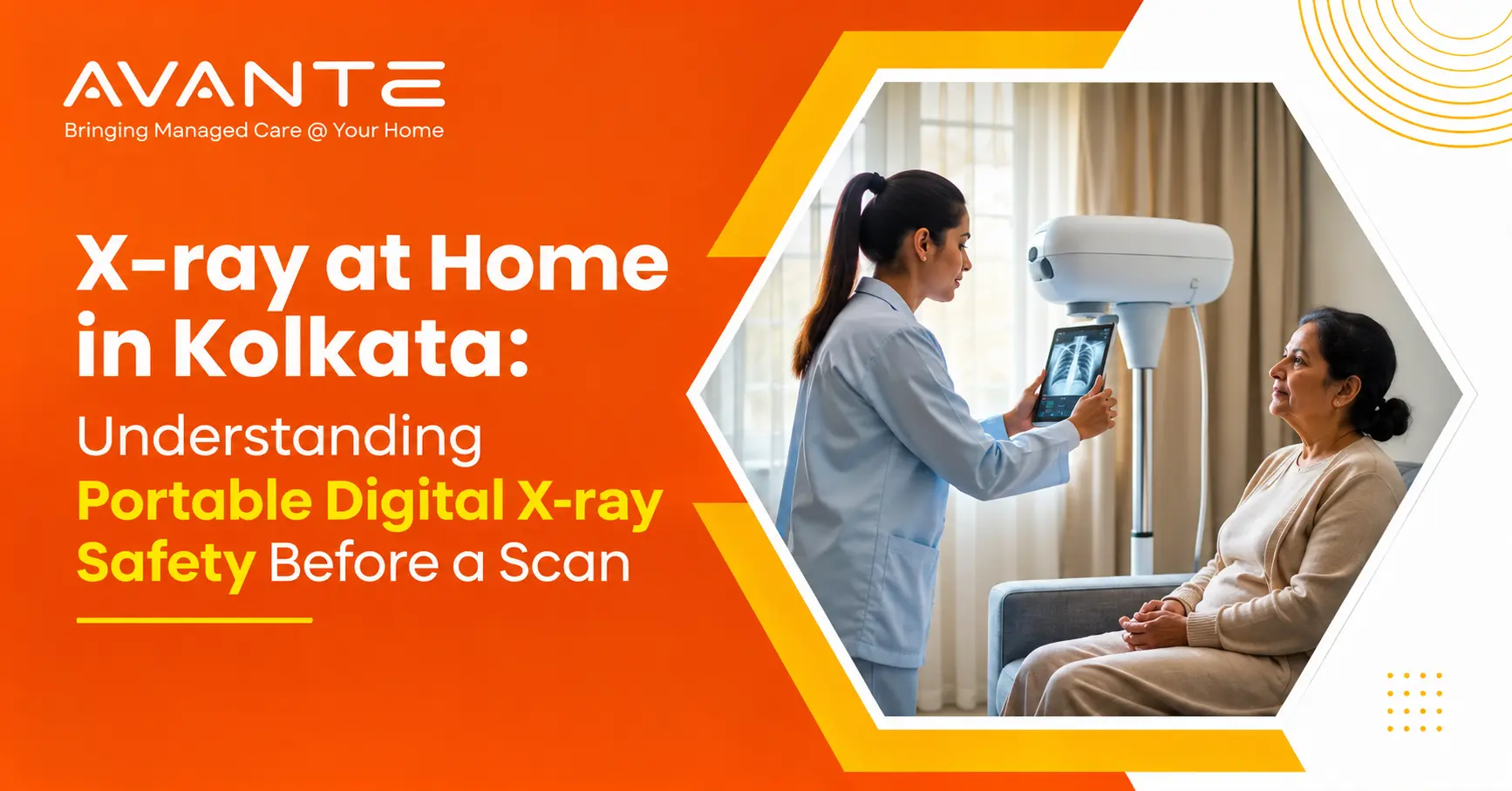
A portable digital X-ray is a compact X-ray machine that a trained technician brings to the patient’s home. It takes the same kind of image as a hospital machine, but the picture appears on a screen within moments instead of on film. The technician positions the patient in bed or in a chair, takes the image and sends it to a doctor for reading. It’s most often used for chest and limb X-rays, and the doctor decides whether a particular scan suits a home visit.
The obvious benefit is comfort. For someone who is bedridden, frail or recovering, a X ray at home in Kolkata avoids a tiring journey, and a patient who is already unwell stays in familiar surroundings.
Is an X ray at home in Kolkata safe?
Yes, when it’s done properly. X-rays use ionising radiation, and that deserves respect. The World Health Organization explains that low doses can slightly raise the chance of long-term effects such as cancer, and that the likelihood rises with the dose. That’s why the aim is always the smallest dose that gives a useful image. Medical X-rays are a deliberate, controlled use of radiation, and the WHO also notes that exposure from an external source stops once the source is shielded or the person moves out of the radiation field. You can read the details in the WHO fact sheet on ionizing radiation and health effects.
In practice, safety at home comes down to a few habits:
- A scan only when it’s needed. The doctor should have a clear reason.
- The smallest useful dose. Modern digital machines let technicians adjust settings and avoid repeating images.
- Distance and protection for everyone else. Family members should leave the room or stand where the technician directs, and wear protection if asked.
- A trained operator. Positioning and settings matter, and so does experience.
- Extra care for pregnancy. Tell the doctor and the technician before the scan.
What the rules in India say
People sometimes ask what the law says. In India, the Atomic Energy Regulatory Board, or AERB, requires medical diagnostic X-ray equipment to be licensed or registered before it’s used on patients. AERB has warned the public that using such equipment without a licence is an offence under the Atomic Energy (Radiation Protection) Rules, 2004, and advises people to have X-rays only at authorised facilities. You can see this in the AERB public notice.
That gives you a useful question to ask any provider: is the portable machine registered with AERB, and who will report the image? A reliable service should be able to answer calmly. If they can’t, that’s worth taking seriously.
Who can conduct the scan, and who reads it?
The scan itself is carried out by a trained radiography technician. The image is then reviewed by a doctor, usually a radiologist, who writes the report. Your own doctor uses that report to decide what happens next.
Most services ask for a prescription or a doctor’s advice first, and that’s sensible. An image without a clinical question behind it can be hard to interpret, and unnecessary radiation is the one thing everyone wants to avoid.
How to prepare before the scan
A little preparation makes the visit smoother:
- Keep the doctor’s prescription and any earlier reports ready.
- Tell the team if the patient is, or might be, pregnant.
- Clear a little space around the bed and keep a power socket nearby.
- Remove jewellery, belts and metal objects from the area being scanned.
- Decide who will stay with the patient, and follow the technician’s instructions on where others should stand.
- Note any medical devices, implants or recent surgery.
The actual exposure takes a moment. With setup, the whole visit is often short, though it depends on the patient and the type of scan.
What a home X-ray can’t do
Being honest about limits is part of safety. A portable X-ray isn’t the right tool for everything. Some conditions need a CT scan, an MRI or a full hospital work-up, and the image quality of a bedside X-ray can be lower than that of a fixed machine, particularly in patients who can’t sit up or hold their breath.
And if there’s sudden chest pain, severe breathlessness, a serious injury or any emergency, go to a hospital. A home scan is for planned, non-emergency care.
Other tests that can be done at home
X-rays are one part of a wider set of home diagnostics. Families often ask the same questions about ECG and blood pressure monitoring.
Can an ECG be done at home?
Yes. A portable ECG machine can be brought to your home, and the recording itself takes only a few minutes. Bedridden patients can have ECG at home in Kolkata too, since the test is done lying down. The ECG itself doesn’t need a long consultation first, but the report should be read by a doctor, especially if there’s chest pain or breathlessness.
What is an ABPM test?
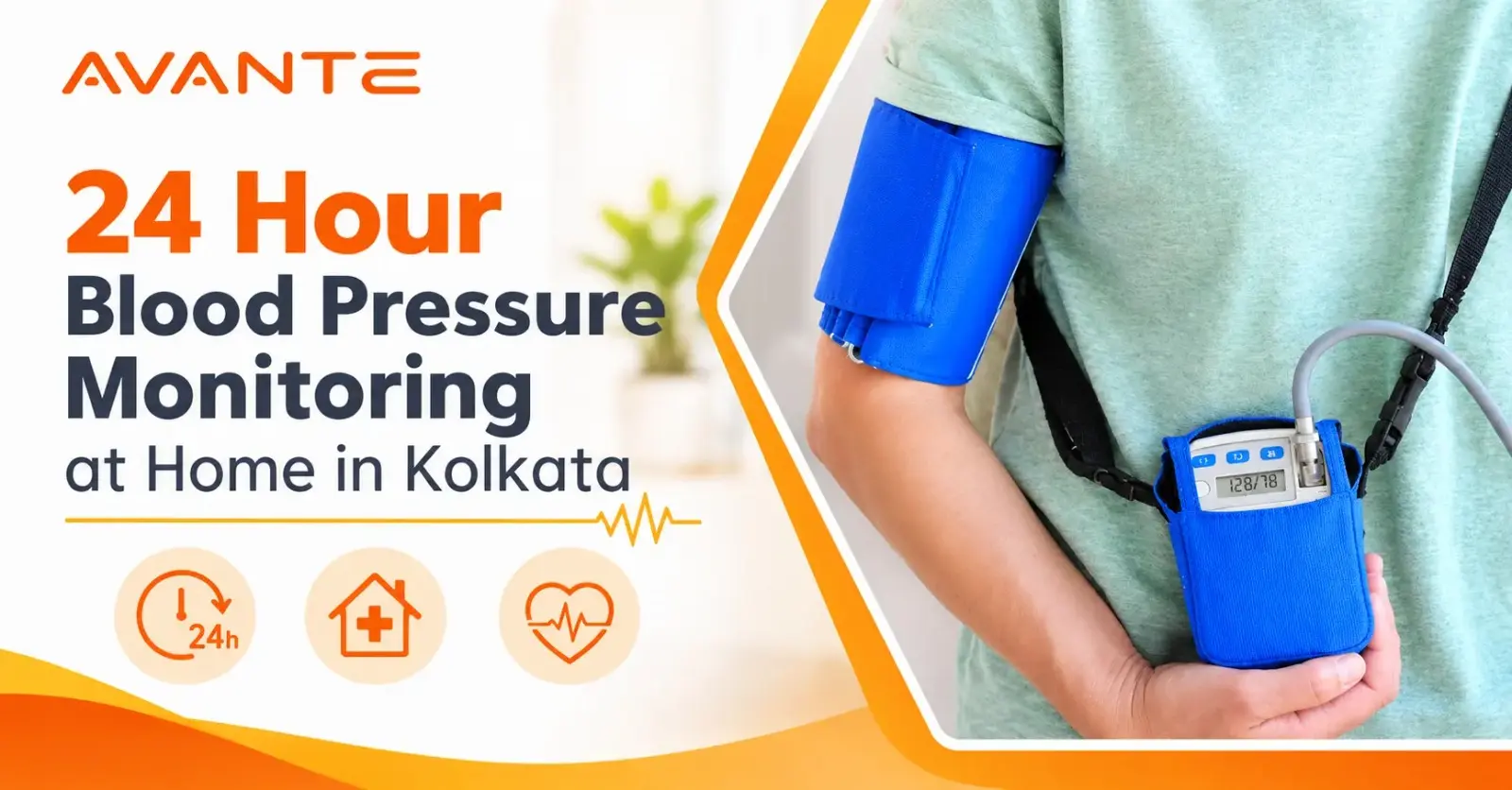
ABPM stands for ambulatory blood pressure monitoring. In an ABPM test at home in Kolkata, a small cuff and recorder measure your blood pressure automatically over 24 hours, including during sleep. Doctors recommend it when clinic readings don’t tell the whole story. We explain how it works in our post on what ABPM monitoring is and why doctors recommend it.
Where it fits into home care services in Kolkata
For many families, a home X-ray is one step in a longer recovery: a surgery, a fracture, a stroke, a long illness. That’s where home care services in Kolkata come in. Home nursing care means a trained nurse supports the patient at home, with things like checking vital signs, giving prescribed medicines, dressing wounds and helping with recovery, so tests and treatment can happen in one familiar place.
If you’re deciding how to arrange all this, our guide on how to choose a home care service in Kolkata lists what to ask, and our post on the first 72 hours of home care in Kolkata explains what the early days usually look like. For recovery after surgery, ask any provider how they coordinate nursing, tests and doctor follow-up.
What does it cost?
Cost depends on the type of scan, the number of images, the distance and the time of the visit, so we’d rather not print a figure that may not apply to you. A good provider will explain what’s included, such as the technician’s visit, the images and the report, before you book.
A final word before you book
An X ray at home in Kolkata can be a kind, practical option for patients who find travel hard, as long as you check a few things first: the doctor’s advice, the operator’s training, the equipment’s registration and who will report the image. If you’d like to talk through your situation, you can get in touch with the team at Avante Health, and we’ll explain what’s possible and what’s better done at a hospital.
Frequently asked questions
1.Can an X-ray be done at home in Kolkata?
Yes. A trained technician can bring a portable digital X-ray machine to your home. It’s commonly used for chest and limb X-rays, and the doctor decides whether your scan suits a home visit.
2.Is a portable X-ray safe?
It is when done by a trained operator with registered equipment, the smallest useful dose and proper protection for others in the room. Tell the team if the patient is pregnant.
3.Do I need a prescription for an X ray at home in Kolkata?
Most services ask for one, or for a doctor’s advice. A clear clinical reason helps avoid unnecessary radiation and makes the report more useful.
4.Who can conduct an X-ray at home?
A trained radiography technician carries out the scan, and a doctor, usually a radiologist, reads the image and writes the report.
5.How long does an X-ray at home take?
The exposure takes a moment. With setup and positioning, the visit is usually short, but it varies with the patient and the type of scan.
6.Can bedridden patients have an X-ray or ECG at home?
Yes, in most cases. Both are commonly done at the bedside, which spares the patient a journey. Ask the provider about your specific situation.
7.How long does an ECG take at home?
The recording takes a few minutes. With setup and a short explanation, the whole visit is usually well under half an hour.
8.What does ABPM stand for?
Ambulatory blood pressure monitoring, a 24-hour blood pressure test done while you go about your day.
9.What is home care nursing?
It’s nursing support provided at the patient’s home, including checking vital signs, giving prescribed medicines, wound care and help with recovery after surgery or illness.